

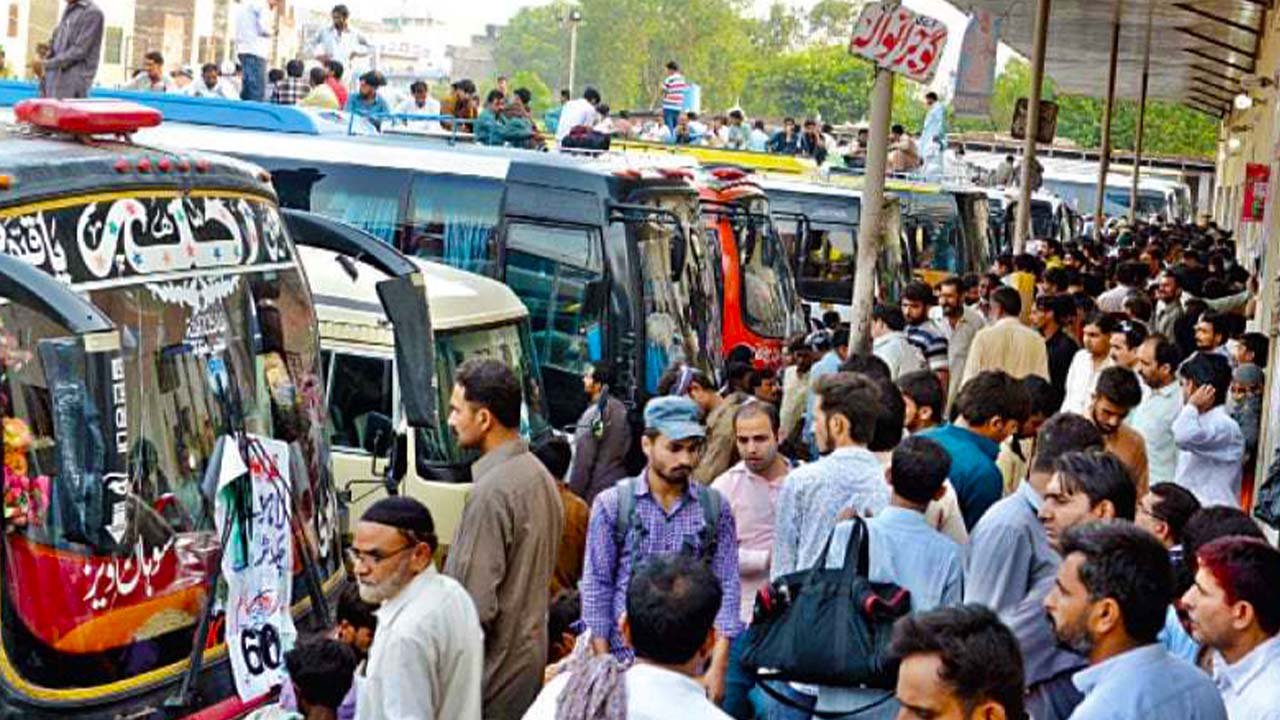

Public transport fares across Pakistan surged by 25 percent on Saturday following the recent hike in petroleum prices. The increase, reported by 24NewsHD TV, affects passenger buses, wagons, and minivans across major routes. Commuters are now facing some of the highest transport costs in the last seven years.
The fare hike comes shortly after goods transporters raised their rates due to higher fuel costs. Public transport operators justified the increase by pointing to rising petroleum and spare parts prices.
Major Routes See Significant Fare Increases
The price of traveling between major cities has risen sharply. The fare from Lahore to Islamabad increased from Rs2,670 to Rs3,338. Similarly, Lahore to Peshawar fare rose from Rs2,530 to Rs3,200.
Other notable increases include Lahore to Faisalabad, where fares went up from Rs980 to Rs1,300. Long-distance routes were also affected, with Lahore to Karachi fares jumping from Rs5,800 to Rs7,250.
Regional routes saw similar surges. Lahore to Multan rose from Rs1,650 to Rs2,063, while Lahore to Sukkur increased from Rs3,400 to Rs4,250. For travelers heading to hill stations, the fare from Lahore to Murree went up from Rs2,290 to Rs2,863. Even smaller routes like Lahore to Sadiqabad saw increases from Rs2,430 to Rs3,038.
Impact on Ordinary Commuters
Passengers at major bus terminals expressed frustration over the sudden fare hikes. Many said the increase has made travel unaffordable for low-income citizens.
Commuters highlighted the challenge of balancing travel expenses with daily living costs. Some noted that attending family events or handling personal matters has become a major financial burden. Affected citizens said poor families are now forced to choose between feeding their children and paying for transport.
The inflationary wave is intensifying public frustration. Citizens warned that continued fare hikes could worsen living conditions and deepen economic hardship across the country.
Transporters Cite Rising Costs
Transport operators defended the fare increases, citing soaring fuel and spare parts prices. Many warned that without adjusting fares, they would be forced to suspend operations.
Operators argue that the rising operational costs make it difficult to sustain services. They also called on the government to take immediate steps to reduce petroleum prices to prevent further inflation.
Experts suggest that if fuel prices remain high, additional fare hikes are likely. Citizens and advocacy groups are urging authorities to implement measures to protect low-income commuters.
The new fare structure highlights the broader economic pressures faced by Pakistanis. Rising fuel costs are not only affecting transport but are also likely to drive inflation in other essential goods and services.
