


Thousands of armed police officers and paramilitary soldiers are deployed in Srinagar to maintain security and order.
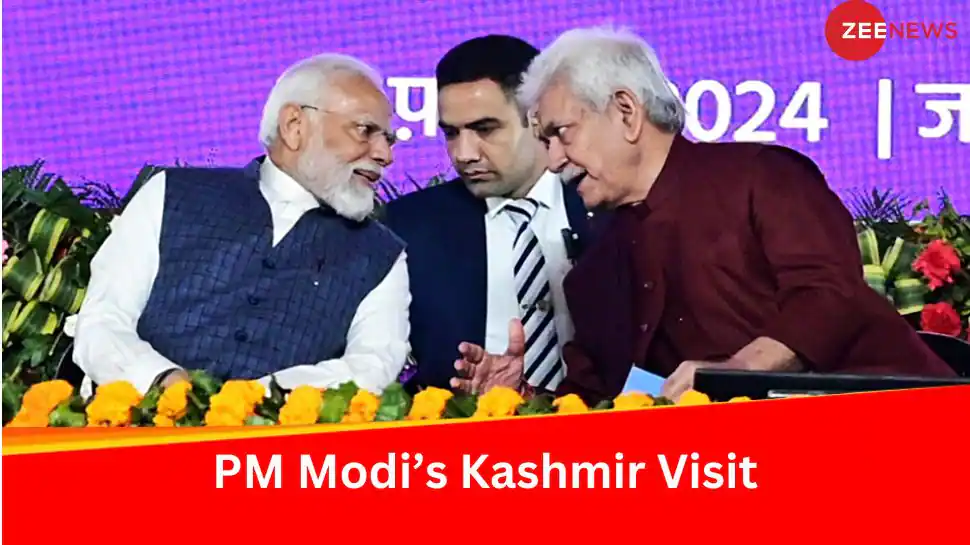
Indian Prime Minister Narendra Modi is set to visit Jammu and Kashmir, the region now directly governed by New Delhi after its semi-autonomy was revoked in 2019. This marks his first trip to the area since the constitutional changes. The majority-Muslim region lost its distinct status during Modi’s administration in 2019, being divided into two union territories: Jammu and Kashmir, and Ladakh. Consequently, the local inhabitants experienced the removal of their inherited land protections and employment benefits.
In the heavily militarized region, the decision sparked outrage among locals, while it was widely celebrated across India. Since 1989, people in the Himalayan area have been fighting for their independence from India’s occupation.
Srinagar, the major city in India-controlled Kashmir, witnessed the deployment of thousands of armed police and paramilitary forces wearing bulletproof vests on Thursday. Additionally, new checkpoints were set up throughout the city. Prime Minister Modi is scheduled to address a public gathering at around 2 pm local time.
To secure the football stadium where Modi would speak, the military established checkpoints and installed barbed wire. Navy commandos patrolled the Jhelum River, which flows through the city, using motorboats.
In a statement on social media platform X, Modi mentioned that he would dedicate various development projects to the nation during his visit, including programs aimed at boosting the agro-economy and tourism. Furthermore, the government statement revealed that Modi would inaugurate infrastructure around the revered Muslim shrine of Hazratbal.
On Thursday, an event is anticipated as part of Prime Minister Modi’s efforts leading up to the first national election since the area experienced a loss of autonomy, scheduled for April and May. The region’s legislative assembly last held elections in 2014. The Modi government maintains that the direct rule from New Delhi over IHK has ushered in a time of “peace and development.” However, numerous locals and critics contend that this has also led to a significant reduction in press freedom and civil liberties.
A large number of schools in the city are closed today, and authorities have encouraged government employees to participate in the protest. To facilitate attendance, the administration is providing buses for transportation, as reported by Omar Abdullah, a former chief minister of IHK. Abdullah stated that most attendees will likely be there under compulsion rather than voluntarily.
In a separate statement, Mehbooba Mufti, another former chief minister of the region, shared on social media platform X that government workers are being gathered as early as 5 am in extremely cold temperatures and then transported via vehicles to attend the Prime Minister’s rally.
