

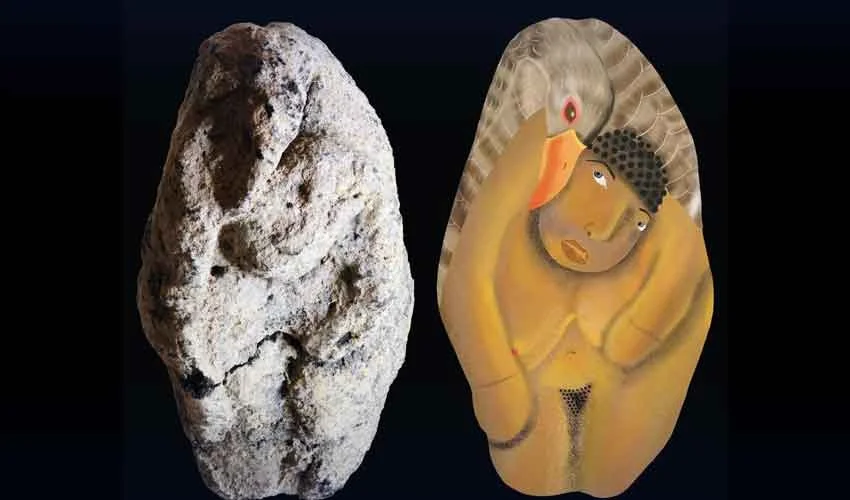

A 12,000-year-old clay figurine discovered at a prehistoric village near the Sea of Galilee is offering rare insight into early symbolic and mythological traditions.
Unearthed at Nahal Ein Gev II, a Natufian culture site in northern Israel, the 1.5-inch (3.7-cm) sculpture depicts a crouching woman with a goose perched on her back in a mating posture. According to researchers, it may be one of the oldest known portrayals of a mythological scene anywhere in the world.
The figurine was found inside a semicircular stone structure about 5 metres wide. Laurent Davin, an archaeologist at the Hebrew University of Jerusalem and lead author of the study published in the Proceedings of the National Academy of Sciences, said it represents the earliest-known example of a human interacting with an animal in artwork. It is also the oldest naturalistic — rather than stylised — portrayal of a woman in Southwest Asian art.
Hebrew University archaeologist Leore Grosman said the figurine likely depicts an imagined union between a human and an animal spirit, a concept common in animistic belief systems where natural elements are believed to possess spiritual essence.
Such imagery, researchers explained, is symbolic rather than literal, often representing fertility, transformation or the sacred interconnectedness of life. Similar human-animal motifs appear in myths across diverse cultures.
The figurine was crafted from dried clay, fired for durability and later painted with red pigment, traces of which remain. A fingerprint of its maker is still visible.
The sculptor used advanced artistic techniques for the era, shaping the piece to capture light and shadow along its left profile. Davin said this suggests it was deliberately displayed in a spot designed to enhance its visual impact.
The object may have served a ritual, storytelling or protective function. It was buried alongside other symbolic items, including human teeth and a child’s remains, highlighting the ritual complexity of Natufian society as it transitioned from nomadic life to permanent settlement.
