

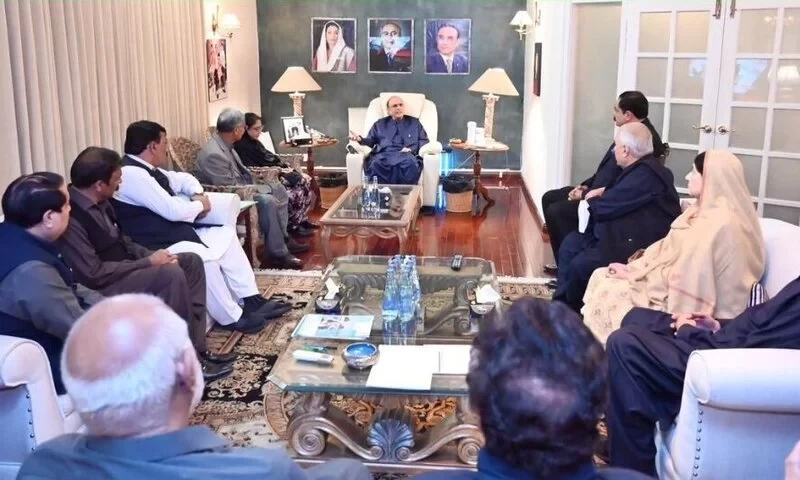

The Pakistan People’s Party (PPP) has taken a strategic step by constituting a committee comprising top provincial leaders to engage in dialogues with politicians from various other parties. This move is aimed at fostering alliances and strengthening political ties across the country.
The committee, featuring prominent figures like Nayyer Bukhari, Qamar Zaman Kaira, Faisal Karim Kundi, Muhammad Ali Shah Bacha, and Sajid Toori, is tasked with holding discussions with political counterparts in Punjab and Khyber Pakhtunkhwa. In Sindh, the responsibility falls upon Saeed Ghani and Syed Nasir Hussain Shah to lead the PPP’s dialogues with other parties.
For the province of Balochistan, the committee includes Chengez Khan Jamali, Rozi Khan Kakar, and Sabir Ali Baloch, who will engage in discussions with politicians to explore potential collaborations and alliances.
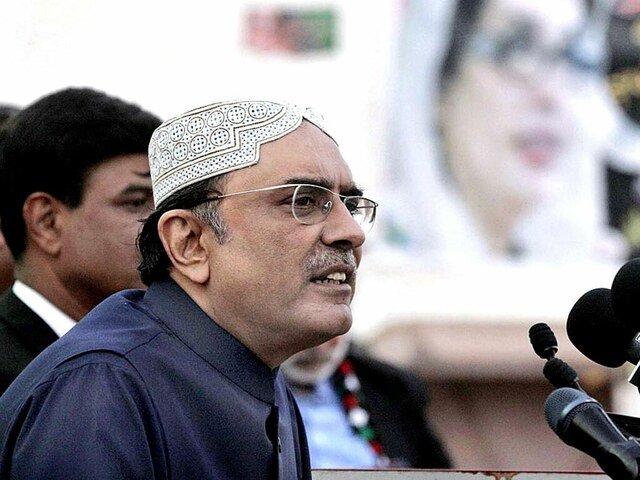
In a pivotal administrative move, Rukhsana Bangash has been appointed as the political secretary to PPP President Asif Ali Zardari, underscoring the party’s commitment to effective communication and political maneuvering.
IHC Designates November 28 for Hearing Case Against Gen Bajwa and Faiz Hameed
The Islamabad High Court (IHC) has marked November 28 as the pivotal date for a hearing that revolves around a petition clamoring for the initiation of a case against General (retd) Qamar Javed Bajwa and General (retd) Faiz Hameed.
The IHC Registrar’s Office, in adherence to procedural norms, issued a cause list detailing the citizen’s plea for legal proceedings against the retired generals and several others.
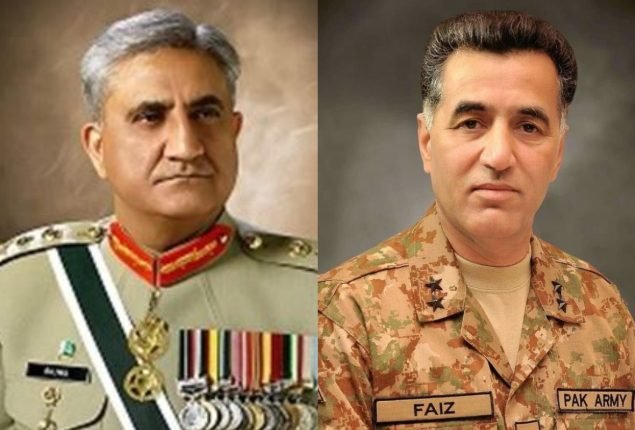
This legal saga originated from a prior petition lodged in the Islamabad High Court, where the petitioner sought the registration of a criminal case against Gen Qamar Javed Bajwa, ex-chief of the army staff, Faiz Hameed, former Director General of Inter-Services Intelligence (ISI), and two journalists. The basis for this legal action was rooted in statements made during an interview by the former army chief.
Initially, the registrar’s office expressed reservations, advising the petitioner to pursue their grievance through the appropriate legal channels. However, recent developments have seen a shift in the narrative, with the court
This proactive approach by the PPP signifies a concerted effort to navigate the intricate political landscape of Pakistan. By assigning specific leaders to different provinces, the party aims to tailor its engagement strategies to the unique political dynamics of each region.
The formation of this committee not only showcases the PPP’s dedication to political outreach but also positions the party strategically as it seeks to build alliances and strengthen its political presence across the diverse provinces of Pakistan. Overall, the PPP’s formation of a strategic committee underscores its commitment to nationwide political engagement and alliance-building.
