

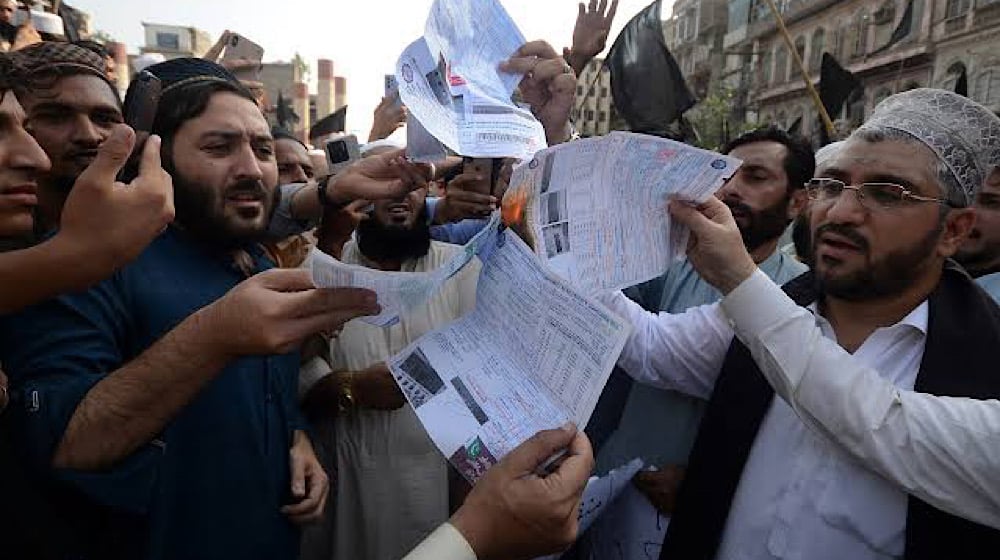

ISLAMABAD: The power consumers in the country will have to pay inflated bills next month after an increase in the fuel cost adjustment charges.
In February 2026, consumers will pay higher electricity bills, while industrialists warn that base tariffs already increased earlier this year.
The Central Power Purchasing Agency (CPPA) has informed regulators that consumers would face an additional Rs1.41 per unit in fuel cost adjustment compared to January bills.
Government eyes incentive tariff amid surplus capacity
During a public hearing chaired by National Electric Power Regulatory Authority legal member Amina Ahmed, government officials outlined plans to manage surplus electricity caused by falling daytime demand and rising solar penetration. Officials said the government was preparing a new tariff package to offer unutilised electricity at marginal cost during daytime hours to different consumer categories.
An official from the Power Planning and Monitoring Company stated that the proposed incentive tariff would serve as an alternative to expanding net metering. He added that the Power Division would soon approach Nepra for approval after securing clearance from the federal cabinet.
Moreover, the proposal aims to narrow the widening gap between daytime and nighttime grid utilisation, as many net-metered consumers rely on the grid after sunset.
Officials informed Nepra that electricity demand dropped to around 8,261 megawatts at its lowest point in December, while peak demand reached nearly 14,888 megawatts, highlighting inefficiencies in capacity utilisation.
Fuel cost adjustment ends relief for consumers
A CPPA official explained that consumers benefited from a negative fuel cost adjustment of 93 paisa per unit in January, based on November consumption. However, this relief ended, and distribution companies now require an additional 48 paisa per unit for December consumption. As a result, authorities will apply a net increase of Rs1.41 per unit in February bills.
Officials attributed the higher fuel cost to an incremental incentive package that raised consumption by nearly half a billion units. Consequently, power producers relied on costlier plants due to limited hydropower and nuclear output. December consumption rose 6.5 percent from November and 8.47 percent year-on-year, while annual demand growth stood at 2.45 percent.
The industrialists have challenged the government’s claim of a 22% growth in industrial consumption of the electricity.
