

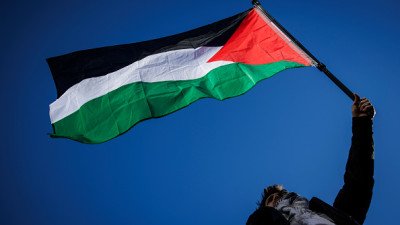

Lisbon Breaks From Caution, Joins Growing International Support for Palestinian Statehood
LISBON – Portugal will formally recognise the State of Palestine on Sunday, the country’s Ministry of Foreign Affairs announced on Friday, marking a significant diplomatic shift amid increasing international criticism of Israel’s ongoing military operations in Gaza.
The statement confirmed that the Official Declaration of Recognition will be issued ahead of a High-Level Conference scheduled for next week. This move positions Portugal alongside a growing number of nations acknowledging Palestinian statehood as the humanitarian crisis in Gaza deepens.
Earlier this week, Portuguese Foreign Minister Paulo Rangel had signaled that the country was actively considering recognition, during his visit to the United Kingdom. His remarks suggested that Portugal had been weighing the issue carefully, preferring a coordinated approach with other European Union members.
Portugal Joins Broader EU Momentum Amid Gaza Crisis
Unlike Spain, which made headlines in May 2024 by officially recognising Palestine alongside Ireland and Norway, Portugal had until now adopted a more measured tone. Lisbon previously emphasized its desire to achieve a united stance within the European Union before making such a decision.
Only a limited number of EU countries have recognised Palestine as a state—mostly nations in Eastern Europe with historic ties to the non-aligned movement, as well as Sweden and Cyprus. However, with mounting civilian casualties and humanitarian devastation in Gaza, pressure is building across Europe for stronger political responses.
The move also aligns with the broader trend within the United Nations. In 2012, the UN General Assembly voted to grant Palestine “non-member observer state” status, a key step in its long-term bid for full international recognition.
Israel, meanwhile, is facing intensifying scrutiny from the global community. Its military actions in Gaza have led to high civilian casualties, widespread starvation, and infrastructure collapse, drawing condemnation from human rights groups and several world governments.
Portugal’s decision is expected to add to the growing international consensus demanding a political solution and renewed focus on a two-state framework for peace in the region.
