


LAHORE: The Pakistan Peoples Party (PPP) has lodged a formal complaint with Chief Election Commissioner Sikandar Sultan Raja, expressing deep concerns over the reported arrests of PPP supporters in Lahore’s NA-127 constituency ahead of the February 8 elections, where PPP chief Bilawal Bhutto Zardari is a candidate.
In a letter authored by PPP Secretary General Taj Haider, the party alleges that the arrests by Punjab Police have instilled a pervasive atmosphere of fear and intimidation in the constituency.
According to Haider’s letter, the arrests include individuals such as former Pakistan Muslim League-Nawaz (PMLN) counselor Khalida Parveen, who was reportedly apprehended for supporting the PPP.
Additionally, two Pakistan Tehreek-e-Insaf (PTI) workers, Shahbaz and Shahzad, were allegedly detained after joining the PPP. The police, when approached for clarification, cited an old case against Parveen.
Zulfiqar Badar, a representative of the PPP, reportedly sought the release of the party activists through official channels, but these efforts proved unsuccessful. Haider expressed serious concerns over what he termed “fascist measures” and feared an escalation if the actions of the police were not curtailed.
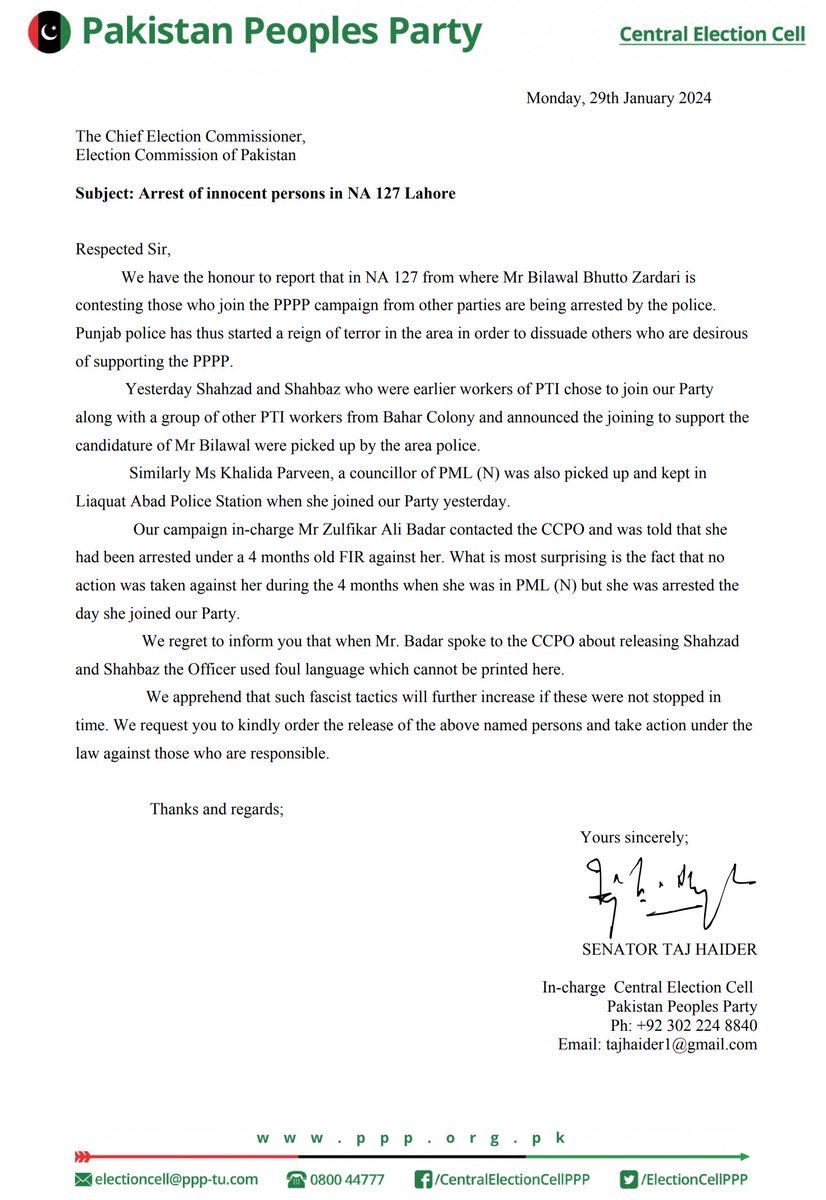
In light of these developments, Haider urged the Chief Election Commissioner to promptly intervene, ensure the immediate release of PPP supporters, and take decisive action against those responsible for the alleged arrests. The letter underscores the party’s commitment to a fair and transparent electoral process, free from undue influence or intimidation.
Bilawal Bhutto Zardari, nominated as the PPP candidate for the prime ministerial position, is actively participating in the elections from NA-127 Lahore. The competition in this constituency includes prominent figures such as PML-N leader Shaista Pervaiz Malik and a candidate supported by the Pakistan Tehreek-e-Insaf (PTI).
The letter highlights the intensifying tensions in the lead-up to the elections and emphasizes the importance of maintaining an environment conducive to democratic practices and electoral fairness.
