


KP Senate Vote
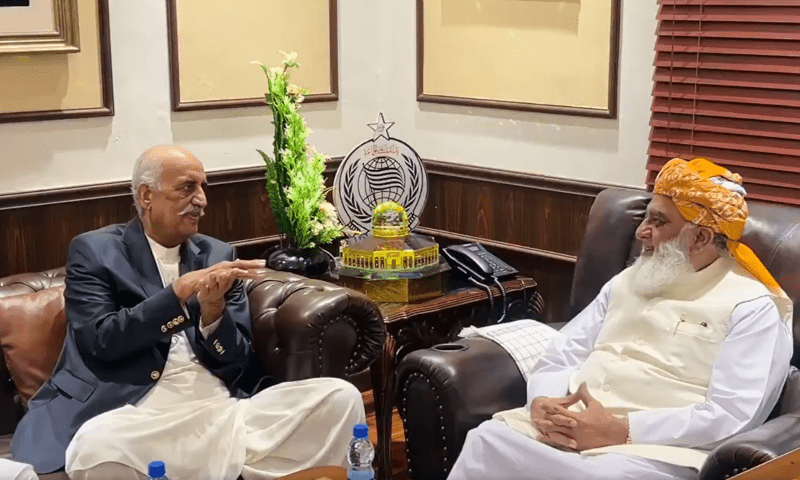
ISLAMABAD: In an effort to secure key support for the upcoming Senate elections in Khyber Pakhtunkhwa (KP), a senior delegation from the Pakistan Peoples Party (PPP) met with the leadership of Jamiat Ulema-e-Islam-Fazl (JUI-F) on Friday.
The meeting, held at the residence of JUI-F chief Maulana Fazlur Rehman, aimed to build political consensus ahead of the July 21 elections but ended without a formal agreement.
The PPP delegation comprised senior party figure Syed Khursheed Shah, KP Governor Faisal Karim Kundi, and Zahir Shah. On the JUI-F side, Maulana Fazlur Rehman was accompanied by prominent leaders including Akram Durrani, Maulana Lutfur Rehman, Maulana Asad Mahmood, Zahid Durrani, and Asjad Mahmood.
Although no specific alliance or electoral partnership was announced, the PPP officials emphasized the historical and political ties between the two parties.
Speaking to the media after the meeting, Syed Khursheed Shah explained that the visit was rooted in their longstanding relationship with Maulana Fazlur Rehman and underscored the importance of respecting each political party’s mandate. “We have come because of our traditional relationship with Maulana Sahib,” Shah said, while avoiding direct commentary on electoral negotiations.
Governor Kundi disclosed that the PPP is aiming to win at least five of the 12 Senate seats from KP, which will be contested later this month. Of these 12 seats, 11 will be filled through fresh elections while one seat was vacated by Sania Nishtar.
The 11 seats include seven general seats and two each reserved for women and technocrats. The nomination process concluded on Friday, and scrutiny of candidates will take place on July 16.
When asked about the potential for political maneuvering or “horse trading” during the elections, Governor Kundi assured that the PPP is committed to transparency and coalition-building. He noted that the main purpose of their visit was to explore possibilities for joint electoral efforts and to ensure the elections are conducted in a fair and democratic manner.
Responding to a question regarding a possible vote of no confidence against the KP government, Kundi stated that such a motion could only be tabled if the opposition was confident in its numbers. His remarks suggest that discussions around broader political strategies are ongoing behind closed doors.
In addition to electoral matters, the meeting also touched on regional security issues. Governor Kundi strongly criticized India for allegedly supporting terrorism in Balochistan and warned of deteriorating relations with Afghanistan if it continues to allow foreign powers such as India and Israel to operate from its territory. “If our neighbour allows Israel and India to use its land, how will there be better relations with them?” he asked, expressing serious concerns about cross-border security threats.
Although the meeting concluded without a concrete agreement, it marks a notable attempt by the PPP to expand its influence in KP’s political landscape and potentially build a tactical alliance with the JUI-F in what is expected to be a closely contested Senate election.
