

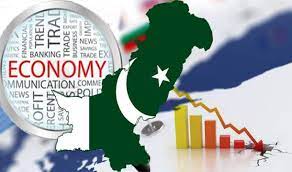

ISLAMABAD: Pakistan’s economy is expected to rise at the second-highest pace in the previous four years, indicating that the economy is recovering from the Covid-19 epidemic.
Pakistan’s GDP is expected to develop at a pace of 5.97 percent in 2021-22, compared to the IMF and World Bank’s estimates of 4 percent and 4.3 percent, respectively, for the same year.
Fuel subsidies had been thought to scupper this estimate, therefore this prediction came as quite a shock.
The industrial sector, followed by the service and agricultural sectors, accounted for the majority of the increase. Cotton, rice, sugarcane, and maize all grew at a rapid pace in the agriculture sector, but wheat production fell.
Gross domestic product (GDP) numbers for the fiscal year 2021-22 and a revised figure for 2020-21 were authorised by the 105th National Accounts Committee, led by Planning Secretary Dawood Muhmmad Bareach.
Overestimated by both the International Monetary Fund and the World Bank
The updated statistics for 2020-21 also showed an increasing trend in growth, with an expected 5.74 percent, up from a tentative projection of 5.57 percent.
The economy grew to $380 billion in 2021-22 from $346.76 billion in the previous year’s corrected number. As the rupee rose against the US dollar, the GDP increased in dollar terms by the most amount in any year.
In 2020-21, per capita income was estimated at Rs314,353, an increase of Rs268,223 from the previous year. Per capita income in dollars has risen from $1,676 to $1,798 in the last year.
This year’s GDP growth rate is 5.74 percent, up from a preliminary estimate of 5.57 percent. The sub-sector of crops has seen an increase from 5.92 to 5.96 percent. In updated estimates, preliminary growth of 8.08 percent has been increased to 8.27 percent for other crops. The provisional figures had industrial growth at 7.79 percent; the updated estimates have it at 7.81 percent, while service sector growth has risen from 5.7 percent to 6 percent.
This year’s GDP growth rate is expected to be 5.97 percent. To achieve this, the economy has to have broad-based growth in all sectors. The agricultural, industrial, and service sectors all saw an increase in the range of 4.40 percent to 7.19 percent. Despite a decline in the wheat output, the agriculture sector saw gains.
In comparison to last year’s 5.83 percent, this year’s rise in vital crops is 7.24 percent. Cotton, rice, sugarcane, and maize output are expected to expand by 17.9 percent, 10.7 percent, 9.4 percent, and 19 percent, respectively.
Compared to the previous year, cotton crop production climbed from 7.1 million to 8.3 million bales, rice production increased by 84,000 to 9.3 million tonnes, sugarcane production increased by 81,03,000 tonnes, and maize production jumped by 8,43,000 to 10,63,000 tonnes.
From 27.5 million metric tonnes in 2020-21 to 26.4 million metric tonnes in 2021-22, wheat output fell. There was a rise in the output of pulses, vegetables, feed, oilseed, and fruits in the other crops.
Livestock is up 3.26 percent this year, forestry is up 6.13 percent, and fishing is up 0.35 percent this year, compared to a decline of 0.73 percent last year.
In 2021-22, the whole industrial sector is expected to rise by 7.19 percent, up from a 7.81 percent gain in 2020-21. In the mining and quarrying industry, production of other minerals has decreased by 4.47 percent.
QIM data (from July 2021 to March 2022) reveals growth of 10.48 percent in the large-scale manufacturing business.Major contributors to this growth are food (11.67pc), tobacco (16.7pc), textile (3.19pc), wearing apparel (33.95pc), wood products (157.5pc), chemicals (7.79pc), iron & steel products (16.55pc), automobiles (54.10pc), furniture (301.83pc) and other manufacturing (37.83pc).
There is a 7.86 percent rise in the electricity, gas, and water business in 2021-22, mostly owing to an increase in subsidies. Value added in the construction industry grew by 3.14 percent in 2021-22 compared to 2.48 percent the previous year, largely owing to an increase in government investment.
Growth in the services sector will be 6.19 percent in 2021-22 compared to 6 percent in 2020-21. The retail and wholesale trade industry expanded by 10.04 percent. Agriculture, manufacturing, and imports all play a role. Agribusiness, manufacturing, and imports all had increases in trade value-added of 3.99 percent, 9.82 percent, and 19.93 percent, respectively.
The gross value added by railroads (41.85pc), air transportation (26.56pc), road transportation (4.99pc) and storage has risen by 5.42pc in the transportation and storage business. The operations related to providing lodging and meals have grown by 4.07 percent. Similarly, improvements in telecommunications, computer programming, consulting, and associated activities improved information and communication by 11.9 percent.
An increase of 4.93 percent in the whole financial and insurance sector is attributed to an increase in deposits and loans. Due to the high deflator, growth in the real estate sector increased by 3.7 percent, whereas growth in public administration and social security (general government) was negative by 1.23 percent. Due to public sector spending, education has grown by 8.65%. The general government’s spending on health and social services grew by 2.25 percent. Other private services are growing at a rate of 3.76 percent.
