

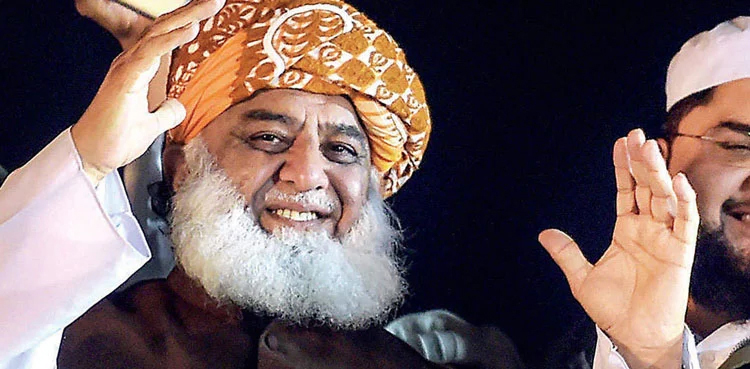

CHARSADDA: Jamiat Ulema-e-Islam (JUI-F) chief Maulana Fazlur Rehman has indicated a shift in tone toward Pakistan Tehreek-e-Insaf (PTI), stating that he seeks to reduce political tensions and limit disagreements to civil discourse rather than open hostility.
Speaking to journalists in Charsadda on Monday, Maulana Fazlur Rehman stressed that he does not intend to respond to the PTI’s aggressive language in kind. “I want to limit our differences to political disagreements, not personal enmity. There’s no benefit in deepening divisions,” he said.
He added, “I have no interest in responding to the PTI’s harsh rhetoric. Our focus should be on restoring mutual respect in politics.”
Reaffirmation of Charter of Democracy
The JUI-F chief reaffirmed his party’s support for the Charter of Democracy, stating, “We have stood by the charter before, and we still believe it is the path toward political stability.”
However, he criticized the ruling coalition government for bypassing legislative procedures, particularly regarding religious institutions. “The government has acted in bad faith on the madrassa bill. The president signed the Madrassa Ordinance, and now it’s being extended without proper parliamentary debate. This shows their real intentions,” he claimed.
Frustration with Opposition in KP
Addressing the political scenario in Khyber Pakhtunkhwa, Fazlur Rehman voiced disappointment with the PML-N’s legal challenge over a reserved seat, which he said only serves to empower the ruling party. “What kind of opposition helps the government at every step?” he asked.
He reiterated that JUI-F believes in moderate politics, calling for change both within PTI and in the province as a whole. “Khyber Pakhtunkhwa cannot afford ongoing conflict. We need political calm and reform, not confrontation,” he asserted.
Maulana Fazlur Rehman also repeated his earlier stance on the legitimacy of PTI’s electoral victory. “While courts may have endorsed their government, history will judge whether our stance on the stolen mandate was justified,” he said.
Concluding his remarks, he urged all political actors to embrace dialogue and democratic values, suggesting that constructive politics could create a better environment for governance and public welfare.
