


JUI-F
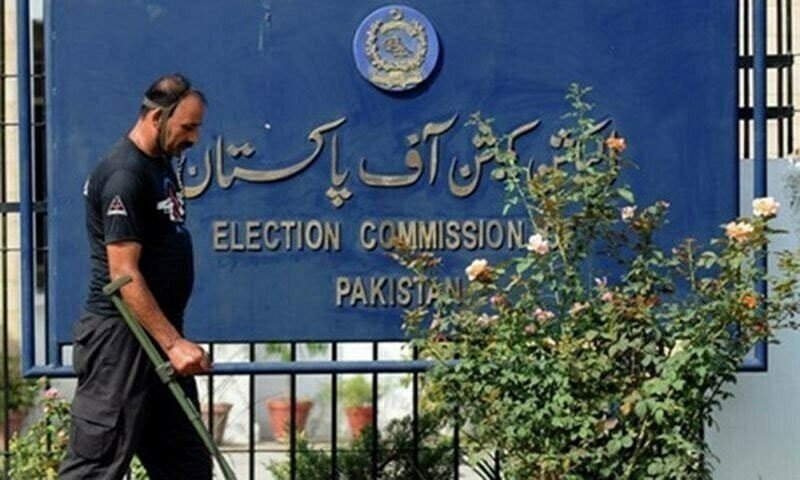
ISLAMABAD: The Election Commission of Pakistan (ECP), in light of the July 21 Senate elections in Khyber Pakhtunkhwa (KP), has written to the province’s chief minister and governor, requesting that they call an early meeting of the provincial assembly to swear in newly elected members on reserved seats.
In a letter addressed to the principal secretary of the KP governor, the ECP highlighted that the completion of the electoral college required for the upcoming Senate elections was being hindered due to the delay in the oath-taking process for members elected on reserved seats.
The letter stressed that the commission is constitutionally bound to hold the Senate elections on time, but the delay in administering oaths is obstructing this mandate.
The ECP reminded the provincial authorities that the KP Assembly speaker had already been approached with a request to administer the oaths. However, the speaker responded that he could only do so when the assembly is in session.
According to the correspondence received by the ECP — including a letter from the Leader of the Opposition, attached to a petition by MPA Suresh Kumar and others — the speaker maintains that neither the Constitution nor the Provincial Assembly of Khyber Pakhtunkhwa Procedure and Conduct of Business Rules, 1988, grants him the authority to summon the assembly independently.
In light of this, the ECP has now requested the governor to summon a session of the assembly urgently. Additionally, a separate letter has been sent to the chief minister of KP, asking him to advise the governor to take immediate action.
In a parallel development, the ECP has reserved its verdict on the contentious issue of reallocation of reserved seats in the KP Assembly. The matter stems from a July 8 ruling by the Peshawar High Court (PHC), which declared the ECP’s earlier notifications regarding reserved seat allocations as null and void. The court ordered the commission to reconsider the distribution after hearing all concerned parties.
The hearing was presided over by Chief Election Commissioner Sikandar Sultan Raja and involved five political parties — Pakistan Muslim League-Nawaz (PML-N), Pakistan Peoples Party (PPP), Jamiat Ulema-e-Islam-Fazl (JUI-F), Awami National Party (ANP), and PTI-Parliamentarians — along with 71 individual petitioners.
Speaking to the media after the hearing, JUI-F’s legal counsel Senator Kamran Murtaza criticized the PML-N’s demand for an increased share of reserved seats. He argued that independent candidates, such as Tariq Awan, who joined a political party after the legal deadline, should not be counted toward that party’s share of reserved seats, maintaining that such individuals legally remain independents.
Currently, the PTI-led government holds a commanding position in the KP Assembly with 92 seats. In contrast, opposition parties, which initially won only 18 of the 115 general seats, have now expanded their presence to 53 seats, significantly altering the political dynamics in the provincial legislature.
