

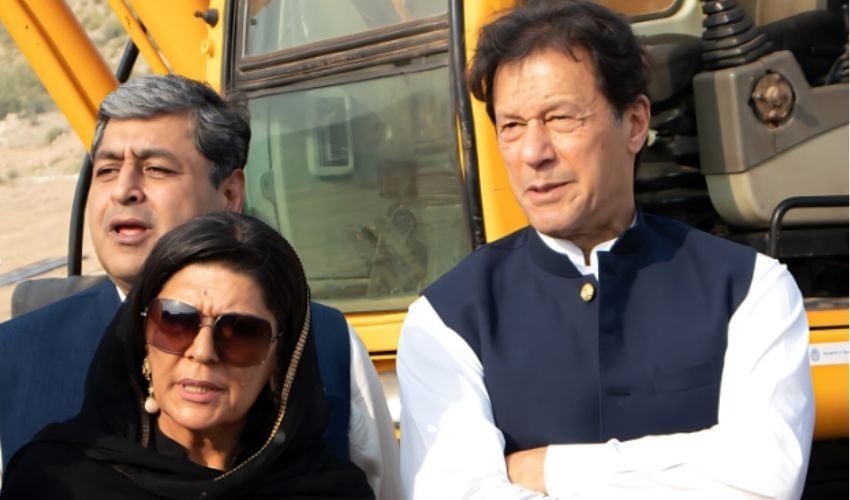

Aleema Khan
Aleema Khan, the sister of former Prime Minister and Pakistan Tehreek-e-Insaf (PTI) founder Imran Khan, stated on Tuesday that her brother is willing to initiate dialogue with the country’s establishment, provided they show readiness for engagement.
Speaking to journalists outside Rawalpindi’s Adiala Jail after a routine visit with the incarcerated leader, Aleema conveyed Imran Khan’s willingness to open communication channels—emphasizing that his priority remains Pakistan’s stability and future.
“He is prepared to speak with the establishment at any time, whenever they are ready,” Aleema said. “But there will be no talks with the Pakistan Muslim League-Nawaz (PML-N),” she added, drawing a clear line regarding political negotiations.
According to her, the former premier has categorically rejected any reconciliation with the ruling party, citing deep-rooted grievances and lack of trust.
Aleema Khan remained tight-lipped when asked about the possibility of Army Chief General Asim Munir being elevated to the rank of Field Marshal. “It’s better if we don’t comment on that,” she said briefly, avoiding speculation on civil-military matters.
Furthermore, Aleema conveyed Imran Khan’s grave concerns regarding the recent 26th Constitutional Amendment, which he believes has dealt a serious blow to judicial independence in Pakistan.
According to the PTI founder, the amendment has effectively “buried” justice and undermined democratic principles in the country. He has therefore urged the Pakistani public to raise their voices against what he views as a dangerous precedent.
Imran Khan, who has been imprisoned since 2023 following a series of legal cases, continues to wield significant political influence from behind bars.
His message, relayed through his sister, appears to signal a strategic shift toward seeking institutional dialogue—particularly with the military establishment—while rejecting any form of cooperation with his political adversaries, especially the PML-N. This development underscores the evolving dynamics in Pakistan’s political landscape as the country navigates a period of heightened uncertainty and unrest.
