

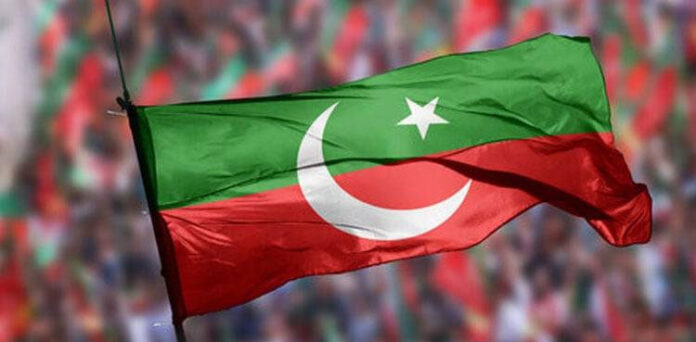

ISLAMABAD: The federal government has announced its intention to ban Pakistan Tehreek-e-Insaf (PTI) as part of its intensified measures against the former ruling party.
Information Minister Attaullah Tarar made the announcement during a press conference in Islamabad, where he also revealed plans to file references against PTI founder Imran Khan and former president Arif Alvi for treason under Article 6.
The decision is based on several factors, including the proven charge that Khan’s PTI received illegal foreign funds and the party’s involvement in the May 9 riots.
Analysts and experts have weighed in on the ban on PTI:
‘Not an Unprecedented Measure’
Veteran journalist Hamid Mir noted that the move to ban PTI is “not an unprecedented measure.”
“Several government ministers have previously signaled that PTI and Pakistan can’t work together and discussed a ban. This discussion began when Shehbaz Sharif became PM in 2022 and intensified after May 9,” Mir explained.
He added that with Arif Alvi no longer serving as president, the government’s decision to ban PTI seems to have been solidified during a meeting led by former PM Nawaz Sharif.
Meanwhile, Anchorperson Shahzeb Khanzada criticized the government’s announcement, calling it a desperate move made just two days after the Supreme Court ruled PTI a parliamentary party.
He pointed out that 11 out of 13 judges of the apex court, including the chief justice, recognized PTI as a parliamentary party. Khanzada argued that the government would have to approach the top court to implement its decision and would likely not receive the desired relief.
‘Govt’s Decision Will Deepen Political Crisis’
Veteran journalist and political analyst Mazhar Abbas argued that the ban is unlikely to bring about political stability.
“Banning the country’s largest political party will not help bring political stability; it will further deepen the political crisis,” Abbas stated. He also emphasized that Article 6 is specific and cannot be applied to a former president or ex-speaker of the National Assembly.
‘Pretty Much Straightforward’
Political analyst Muneeb Farooq explained that the procedure for banning a political party is clearly laid out in the Political Parties Order 2002 and replicated in the Election Act 2017, under Section 212.
Farooq detailed the process, from the Ministry of Interior initiating the declaration to the Supreme Court’s decision to uphold or endorse the reference. He suggested that the chances of the declaration’s success are slim if the Chief Justice of Pakistan decides to involve a full court hearing.
Considering recent Supreme Court decisions favorable to PTI, Farooq believes the likelihood of the declaration’s success is weak. However, if the Chief Justice picks a specific bench, the outcome could be different.
