

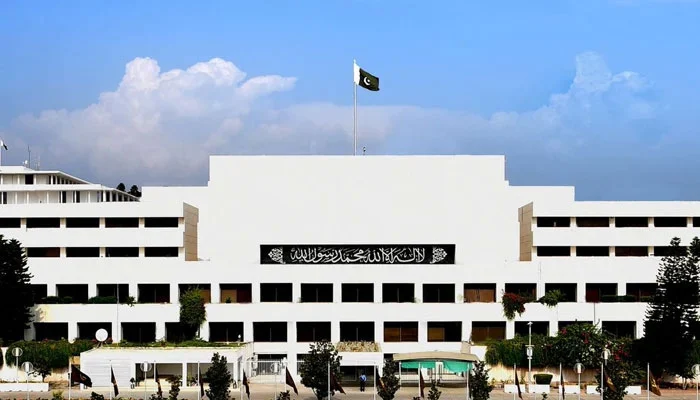

ISLAMABAD: The 16th National Assembly of Pakistan convened for fewer working days and recorded significantly fewer working hours in its first year than its predecessor, according to an analysis by the Pakistan Institute of Legislative Development and Transparency (Pildat).
Despite the decline in working days and hours, the report highlighted a sharp increase in legislative activity, with numerous key bills passed without thorough debate or scrutiny by Members of the National Assembly (MNAs).
The Assembly held its inaugural session on February 29, 2024, and completed its first parliamentary year on February 28, 2025. Pildat’s analysis revealed that the 16th National Assembly held 93 sittings and worked for 212 hours, compared to the 15th National Assembly’s 96 sittings and 297 hours in its first year.
The cost of each working hour during the first year of the 16th National Assembly stood at approximately Rs60.08 million, while the average budget per sitting was Rs136.96 million.
However, legislative output surged, with 47 bills passed — a staggering 370% increase from the 10 bills passed in the first year of the 15th National Assembly. This included critical laws and the 26th constitutional amendment, although many were rushed through without sufficient scrutiny or referrals to relevant Standing Committees. Nine significant bills were passed without being reviewed by MNAs.
Declining Attendance
MNA attendance dropped to an average of 66% — down from 73% in the previous assembly’s first year. The cost per MNA to taxpayers amounted to Rs37.9 million during the year.
Prime Minister Shehbaz Sharif attended only 17 out of 93 sittings (18% attendance), mirroring the poor attendance record of former Prime Minister Imran Khan, who attended 19% of sittings in the first year of the 15th National Assembly. Former PM Nawaz Sharif had an even lower attendance rate, joining just 7% of sittings in his first year.
Leader of the Opposition Omar Ayub Khan attended 62 sittings (67% attendance), surpassing the 55% attendance of his predecessor, Shehbaz Sharif.
Most Vocal MNAs
Omar Ayub Khan emerged as the most vocal MNA, speaking for 13 hours and 28 minutes during the year. Other top speakers included:
- Khawaja Muhammad Asif (Federal Minister for Defence, Defence Production, and Aviation) — 5 hours and 30 minutes
- Bilawal Bhutto Zardari — 4 hours and 19 minutes
- Attaullah Tarar (Federal Minister for Information, Broadcasting, National Heritage, and Culture) — 4 hours and 11 minutes
- Maulana Fazlur Rahman — 3 hours and 41 minutes
Notably, no female MNAs were among the top five most vocal members during the first year.
The report also pointed out that 49.18% of scheduled agenda items remained incomplete, indicating that nearly half of the planned business was left unfinished.
