

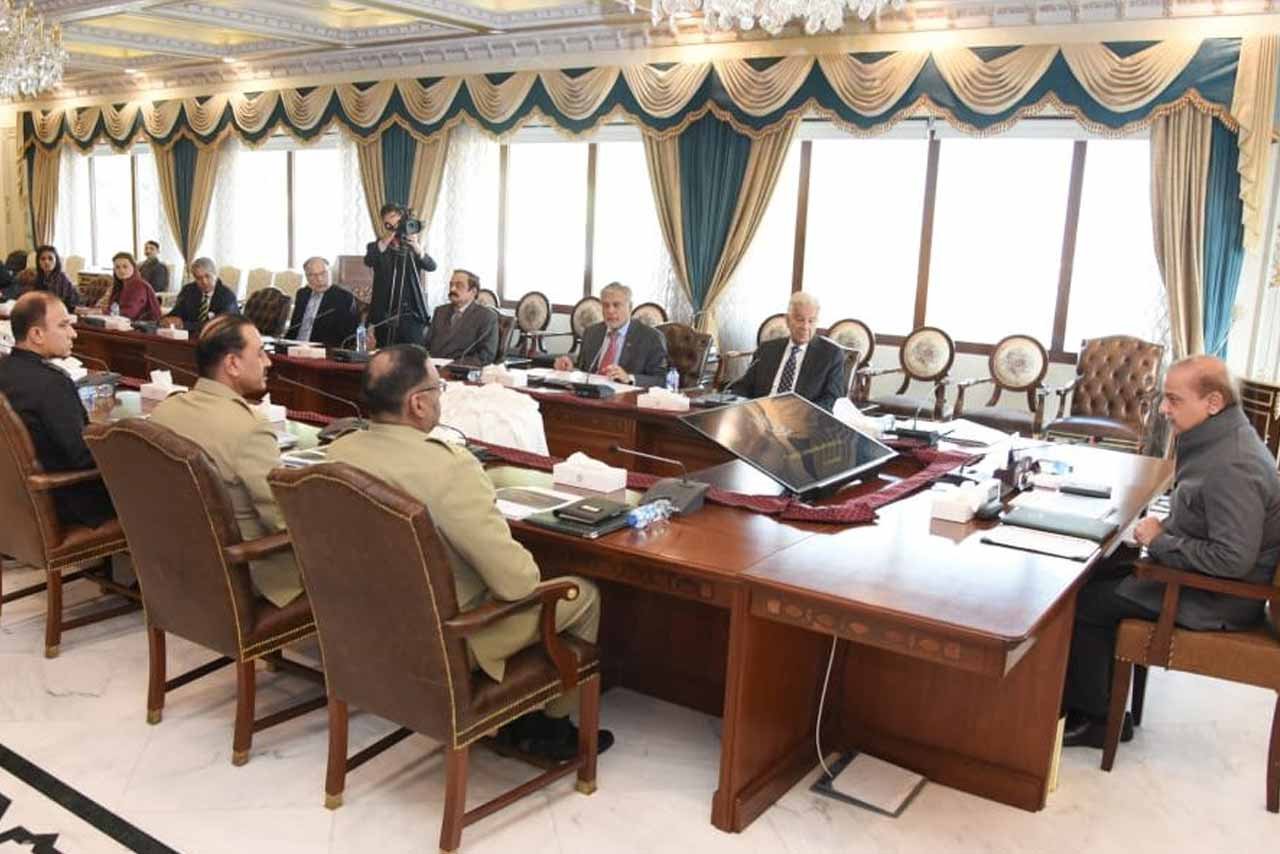

NSC Meeting
ISLAMABAD: In response to rapidly escalating tensions in the Middle East, Prime Minister Shehbaz Sharif has called for an emergency meeting of the National Security Committee (NSC) to be held tomorrow, government sources confirmed on Saturday.
The high-level session, which will bring together top civilian and military leadership, is scheduled for 12:00 PM at the Prime Minister’s House in Islamabad.
The NSC meeting comes amid intensifying hostilities between Iran, Israel, and the United States, which have triggered global concern over the potential outbreak of a wider regional conflict.
With the United States launching direct strikes on Iranian nuclear facilities and Tehran responding with missile attacks on Israel, the situation has raised alarm across the region, including in Pakistan, which shares deep religious, economic, and security interests with key stakeholders.
According to senior government officials, the NSC will hold detailed consultations on Pakistan’s position in the unfolding crisis. The discussions will assess diplomatic, strategic, and security dimensions of the conflict, and could result in significant decisions — potentially including expressions of support for Iran or calls for immediate de-escalation through international mediation.
One of the central briefings at the meeting will be delivered by Chief of Army Staff Field Marshal Syed Asim Munir, who recently returned from a critical visit to the United States.
His debrief is expected to shed light on Washington’s strategic posture and offer insights into how the US intends to proceed in the current conflict, especially in relation to regional allies and military deployments.
In addition to evaluating the international situation, the NSC will also review Pakistan’s internal and border security landscape. The forum is likely to discuss the implications of the Middle East crisis for Pakistan’s western border with Iran and the wider implications for regional trade routes, energy security, and public sentiment at home.
Key figures expected to attend the session include Defence Minister Khawaja Asif, Interior Minister Mohsin Naqvi, Deputy Prime Minister and Foreign Minister Ishaq Dar, and Finance Minister Muhammad Aurangzeb, alongside senior military commanders and intelligence officials.
This NSC session could mark a critical moment in Pakistan’s foreign policy trajectory, as Islamabad navigates the geopolitical fallout of a conflict that threatens to engulf the wider Middle East and disrupt global security dynamics.
