

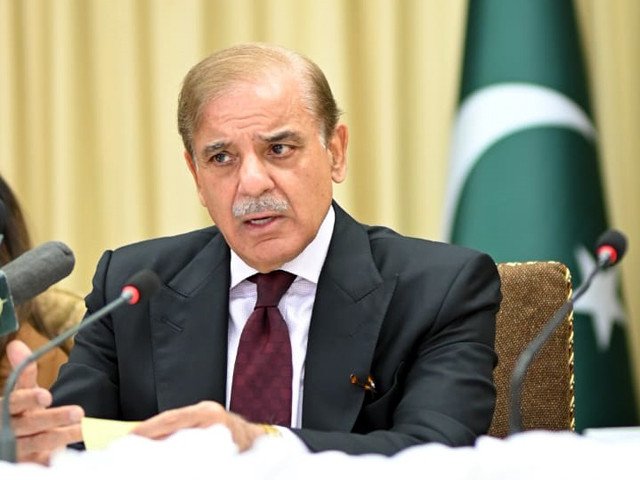

Prime Minister Shehbaz Sharif declared on Friday that the time has come to put an end to “Fitna al-Khawarij,” referring to the banned Tehreek-e-Taliban Pakistan (TTP), which has been responsible for numerous attacks on both civilians and security forces.
Addressing the Central Apex Committee meeting on the National Action Plan (NAP), the prime minister urged provinces, federal agencies, and institutions to develop a comprehensive strategy to combat terrorism and maintain peace across Pakistan.
The meeting, which included both civil and military leadership, focused on reviewing the country’s security situation. PM Shehbaz emphasized that ensuring law and order nationwide is essential for fostering progress and development.
He specifically mentioned the presence of infiltrators, particularly in Khyber Pakhtunkhwa, and stated that recent cross-border attacks from terrorists had been met with a robust response by Pakistani forces.
Addressing External and Internal Threats
PM Shehbaz also voiced concern about both external and internal elements working to undermine Pakistan. “There are agents abroad, disguised as friends, who are actively engaging in anti-Pakistan campaigns. This is a significant threat,” he warned.
Further, the prime minister highlighted the danger posed by foreign conspiracies against Pakistan, especially those emanating from Balochistan, and underscored the need for vigilance against such malicious activities.
Strengthening Security Forces
The prime minister stressed the importance of equipping police forces with modern technology and ensuring merit-based recruitment to enhance the effectiveness of law enforcement. He expressed satisfaction over efforts to boost the capacity of counter-terrorism departments in the provinces, particularly noting Punjab’s leadership in this regard.
PM Shehbaz also raised concerns over the rising issue of “digital terrorism,” where false information is spread on social media platforms to mislead and incite the public.
These remarks followed the recent infiltration attempt by the TTP and the Afghan Taliban near Kurram and North Waziristan on December 28, which was successfully thwarted by Pakistani security forces. The attackers, numbering 20 to 25 militants, launched an unprovoked assault on Pakistani posts with heavy weaponry.
Call for National Unity
Emphasizing the importance of national unity, PM Shehbaz urged provincial governments and the military to work together to maintain law and order. He assured that any obstacles on critical routes, such as the Peshawar-Parachinar road, would not be tolerated.
The prime minister also praised the role of various stakeholders in the successful peace agreement reached during the Kohat grand jirga, a significant milestone in stabilizing conflict-prone areas.
Regarding the “attack on Islamabad,” without explicitly naming the Pakistan Tehreek-e-Insaf (PTI), he condemned the use of social media platforms to spread misinformation and escalate tensions, calling for urgent measures to address this new form of digital warfare.
National Interest Above All
PM Shehbaz reiterated that Pakistan’s national interest must always come first, saying that personal preferences should never interfere with the nation’s goals.
Highlighting Pakistan’s recent achievement as a non-permanent member of the United Nations Security Council, the prime minister reaffirmed that all efforts must be focused on safeguarding the nation’s interests.
He also acknowledged the sacrifices made by police, Rangers, and military personnel in the fight against terrorism, recognizing their bravery in protecting the country.
Tackling Rising Terrorism
Terrorist activities have surged in provinces such as Khyber Pakhtunkhwa (KP) and Balochistan, which share borders with Afghanistan, particularly targeting security personnel and law enforcement. The Pakistani government has repeatedly urged Kabul to prevent its territory from being used by terrorist groups to launch attacks on Pakistan.
Alongside diplomatic efforts, Pakistani security forces continue to take decisive action against terrorists. In response to the recent infiltration attempt, at least 15 militants, including Afghan Taliban members, were killed. A week earlier, 13 terrorists were neutralized in separate operations across KP.
Statistics from the Centre for Research and Security Studies (CRSS) reveal a dramatic increase in violence between July and September 2024, with a 90% rise in fatalities due to terrorist attacks and counter-terrorism operations. A total of 722 people were killed, and 615 others were injured in 328 incidents.
In 2024, Pakistani military reports indicated the deaths of 383 soldiers and 925 militants in various clashes, underscoring the ongoing intensity of the conflict.
Conclusion: A Unified Approach for a Secure Future
PM Shehbaz concluded by calling for a unified effort to combat terrorism and achieve long-term peace. “Now is the time to come together for the future of Pakistan,” he stated, emphasizing that the nation’s security and stability must be prioritized above all else.
