

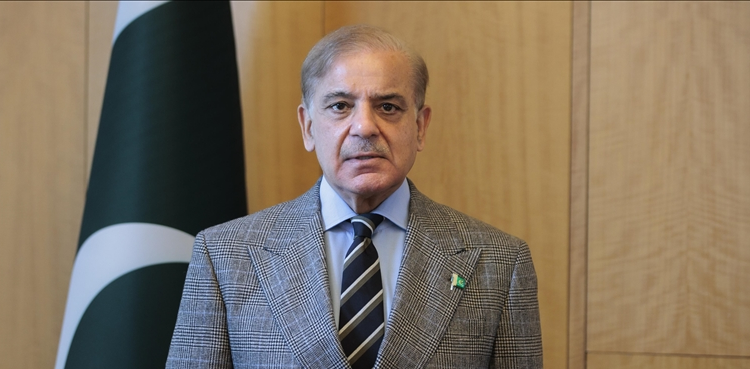

ISLAMABAD — Prime Minister Shehbaz Sharif on Sunday reaffirmed his government’s commitment to supporting Pakistan’s accelerating solar energy revolution, calling it the most cost-effective way to produce electricity globally. He made the remarks while launching ‘Apna Meter, Apni Reading’, a smart mobile application designed to empower electricity consumers across the country.
Speaking at the launch ceremony, PM Shehbaz said Pakistan is among the few countries where solarisation is progressing rapidly, and the government would not stand in its way. “We welcome the solar boom,” he said, highlighting that solar power remains a vital solution to Pakistan’s energy and economic challenges.
To promote clean energy without burdening consumers, the federal government reduced the proposed 18% sales tax on imported solar components to 10%, with only 46% of items affected. Finance Minister Muhammad Aurangzeb explained the adjustment would lead to just a 4.6% price increase in imported solar panels.
The prime minister called the launch of the mobile meter-reading app a “revolutionary reform” in the power sector. The app, available in five regional languages, allows consumers to submit their own electricity readings—curbing overbilling, enhancing transparency, and boosting inter-provincial coordination.
He emphasized that his administration has already taken bold steps in power sector reform, including merit-based appointments to electricity distribution companies (DISCOs) and crackdowns on corrupt mafias. He praised the task force and power ministry for securing a major achievement: lowering the household electricity price to Rs7.41 per unit after “difficult negotiations” with independent power producers (IPPs).
PM Shehbaz also shared progress on settling the circular debt crisis through negotiations with banks and noted that falling international oil prices were passed on to the public through reduced petroleum rates.
Additionally, he announced the removal of the PTV fee from electricity bills—a long-standing public grievance.
However, he acknowledged two major challenges: power theft amounting to Rs500 billion annually, and the growing gap between electricity production and consumption caused by widespread solar adoption.
Despite these challenges, the prime minister assured the public that the government is committed to further reducing power tariffs for both industrial and household users and placing Pakistan on the path to sustainable energy progress.
Minister for Energy, Sardar Awais Leghari, also addressed the event, stressing that technology-driven solutions were now being used to ensure transparency in billing. He noted that the government had already reimbursed billions of rupees wrongly charged through overbilling and that the meter reading process was now effectively in the hands of consumers via the new app.
