

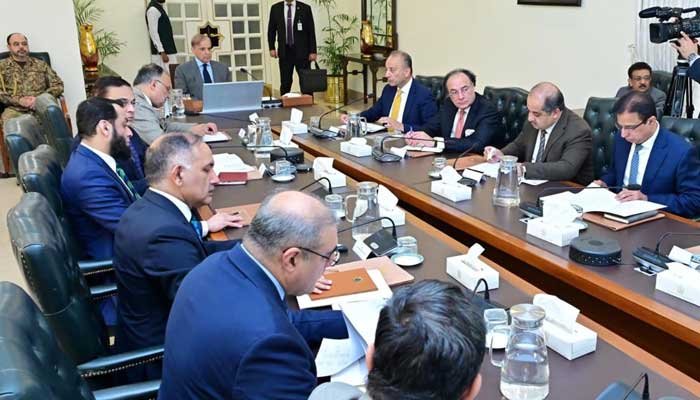

Prime Minister Shehbaz Sharif has approved a comprehensive 5-year flood management strategy focused on fixing, expanding, and rebuilding critical infrastructure, Federal Minister for Climate Change Musadik Malik announced on Wednesday.
The approval follows significant losses from recent floods, including the 2022 disaster, which caused damage equivalent to 9% of Pakistan’s GDP, displaced around 40 million people over several major events, and claimed more than 4,500 lives. This year alone, 3.1 million people lost their homes due to floods, highlighting the urgent need for improved preparedness.
During a press conference alongside the NDMA chief, Malik outlined the government’s three-phase approach. The short-term plan, spanning 200-250 days, aims to repair damaged infrastructure such as dykes, flood gates, and drainage systems before the next monsoon.
Early warning systems are to be integrated at district and tehsil levels, with local officials ensuring that alerts reach vulnerable communities first. The plan also includes provisions for temporary schools and mobile healthcare units in flood-affected areas to maintain continuity of education and healthcare services.
The medium-term strategy, covering the next three years, focuses on expanding and upgrading existing drainage and flood management systems to cope with increasingly intense monsoon rains. The long-term plan, spanning five years, emphasizes climate-resilient infrastructure capable of withstanding extreme weather events, including riverine, flash, and coastal flooding.
PM Shehbaz will personally oversee the program, reviewing implementation and integration to ensure Pakistan is better prepared for future extreme weather events.
Authorities have been instructed to coordinate with provincial governments and relevant ministries to implement the short-term plan immediately. Additionally, the prime minister has called for convening the National Water Council to carry out national-level water management planning.
Highlighting Pakistan’s vulnerability as a developing country, PM Shehbaz stressed that a significant portion of GDP is spent coping with climate change impacts, despite the country’s negligible contribution to global carbon emissions.
The government aims to minimize flood-related losses and strengthen disaster preparedness to safeguard lives, property, and development progress in the coming years.
The meeting included federal ministers Malik, Ahsan Iqbal, Ahad Khan Cheema, Muhammad Aurangzeb, Ataullah Tarar, and senior officials from relevant departments.
