

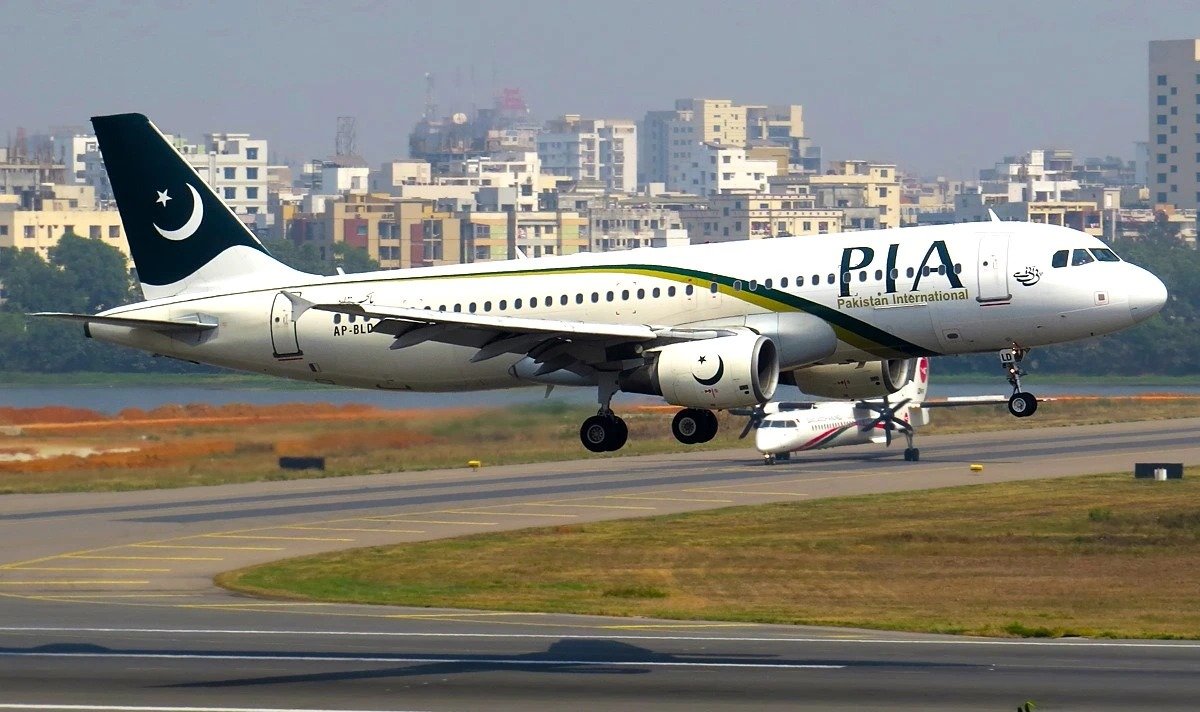

The Privatisation Commission Board has recommended selling a majority or full stake in Pakistan International Airlines (PIA) in a renewed bid to offload the struggling carrier while allowing for partial government ownership.
Led by newly appointed Advisor to the Prime Minister on Privatisation, Muhammad Ali, the board advised the Cabinet Committee on Privatisation (CCOP) to divest between 51% and 100% of PIA’s shares, including management control. This decision comes after a prior unsuccessful attempt, where most of the six shortlisted investors were hesitant to proceed due to excessive government interference.
The renewed privatisation push follows Prime Minister Shehbaz Sharif’s recent dissatisfaction over delays in restructuring state-owned enterprises. The government has also committed to the International Monetary Fund (IMF) that PIA will be privatised by July this year.
Key Developments in the Privatisation Bid
During the latest attempt, potential investors will be offered between 51% and 100% shares, with the final stake to be determined after consultations with interested buyers. The terms and conditions of the equity transfer will be finalised during the bidding process and included in the bid documents for CCOP approval.
The Privatisation Commission informed the IMF that at least three parties might participate in the bidding, including two investors who previously withdrew due to the government’s refusal to waive the 18% sales tax on aircraft leases and remove PIA’s Rs45 billion liabilities. A third potential bidder, reportedly with no aviation industry background but considerable influence, is also expected to participate.
In December, the IMF relaxed its previous conditions, including tax waivers and debt restructuring, while reopening European flight routes. These changes are seen as major incentives for a successful privatisation bid.
Previously, the government aimed to sell at least 60% of shares, but most investors demanded 80% to 100% ownership to eliminate state interference in operations. The earlier privatisation attempt collapsed after the selection of a real estate developer as the sole bidder, offering Rs10 billion—far below the Rs85 billion minimum asking price. The financial advisory firm Ernst & Young, which received Rs1.2 billion in fees for that failed bid, has again been retained as an advisor for this round.
Market sentiment analysis is currently underway before issuing an Expression of Interest (EOI) to potential investors by the end of March, though there are concerns about meeting this deadline. The government anticipates completing investor shortlisting and due diligence between April and June.
Roosevelt Hotel Privatisation Also Under Review
The Privatisation Commission Board also discussed various transaction structures for privatising the Roosevelt Hotel Corporation in New York. A financial advisor briefing will be held before finalising the privatisation strategy.
Last week, the CCOP directed the commission to privatise the Roosevelt Hotel through competitive bidding, leaving open the option of either a full sale or a joint venture. The CCOP emphasised that the commission should carefully assess the transaction structure, considering potential risks and the time required to maximise proceeds.
In August, the board had proposed a government-to-government privatisation approach while keeping options open for an outright sale, joint venture, or 99-year lease. However, this conflicted with the financial advisor’s recommendation, which leaned toward a joint venture as the most profitable solution.
