

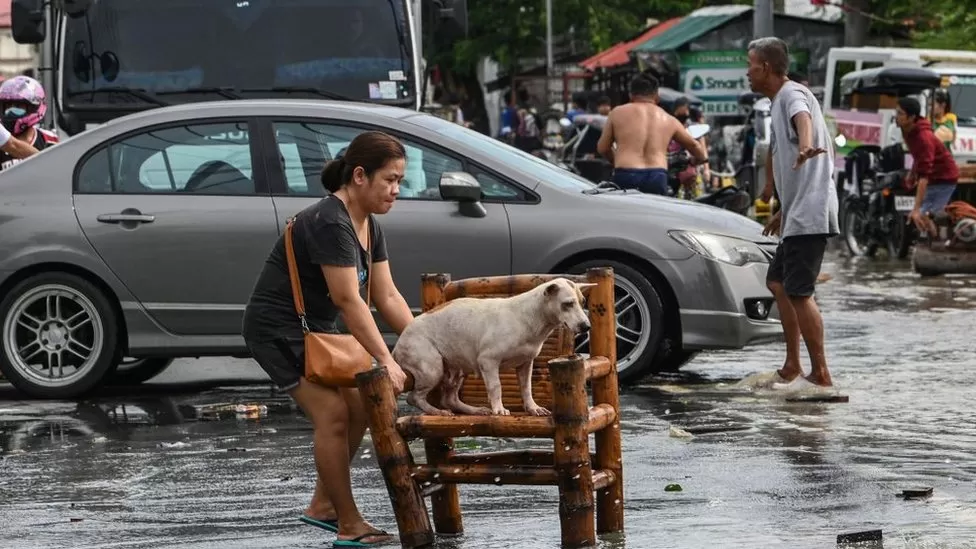

In the Philippines, a storm that left homes underwater and millions without electricity claimed the lives of five rescue personnel.
They were operating in the San Miguel district, north of the Philippine capital of Manila, when sudden floods washed them away.
Typhoon Noru severely damaged the area, leaving some inhabitants stranded on their roofs while others swam through water that was up to their chests in the trash to provide supplies.
Over half of the country’s 110 million people reside on the island of Luzon, where the typhoon produced wind gusts of up to 240 km/h (149 mph).
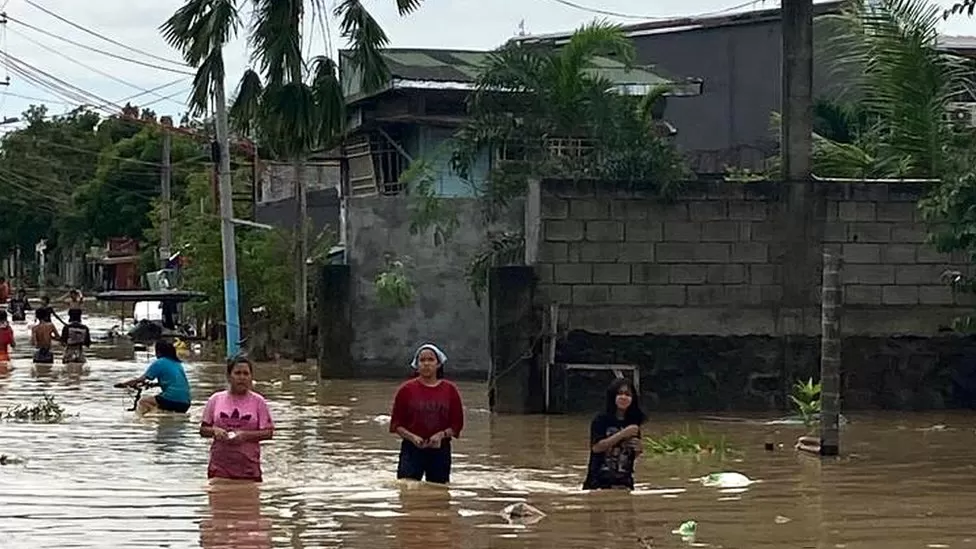
Locally called Karding, the super typhoon Noru initially made landfall on Sunday at 20:20 local time (12:20 GMT).
Officials had earlier issued warnings of “severe flooding” in parts of the nation’s capital, Manila, and more than 74,000 people had been evacuated from the path of the typhoon.
However, there haven’t been any reports of significant harm or widespread fatalities so far.
At a press conference on Monday, Philippine President Ferdinand Marcos declared, “I think we may have gotten lucky, at least this time. “I believe it’s evident from what we’ve done these last two days that preparation is extremely, very crucial,” he continued.
“It hasn’t ended yet. When the majority of evacuees have returned to their homes, I believe, is when we can stand down “said he.
Mr. Marcos has directed that supplies be airlifted and that villages receive cleaning tools.
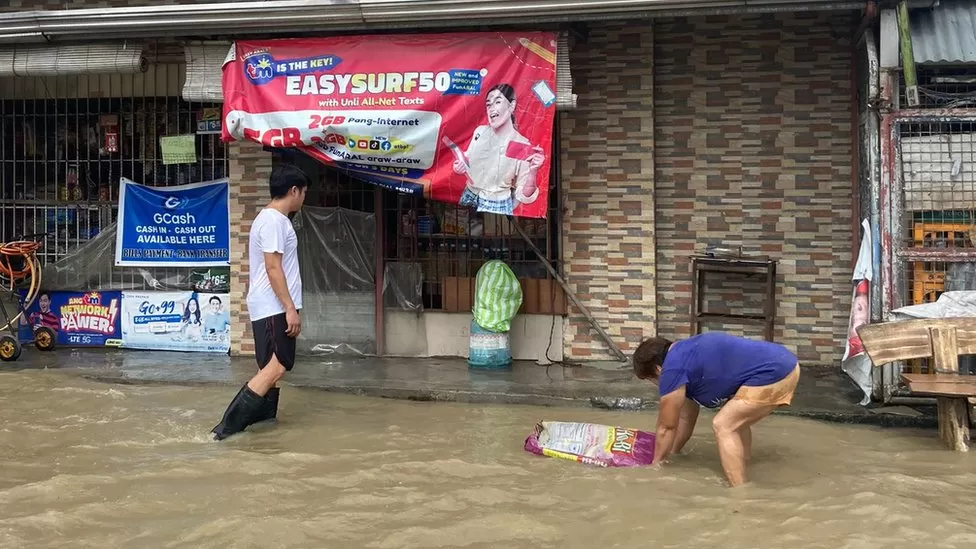
Fishermen had previously been prohibited from leaving the land in Quezon Province, east of Manila, and there were reports of certain villages being without power.
Ferry services and flights have been canceled. President Marcos halted all government operations in Luzon and canceled all classes.
Residents were compelled to take shelter at the Dingalan municipality, northeast of Manila and on the Pacific coast.
