

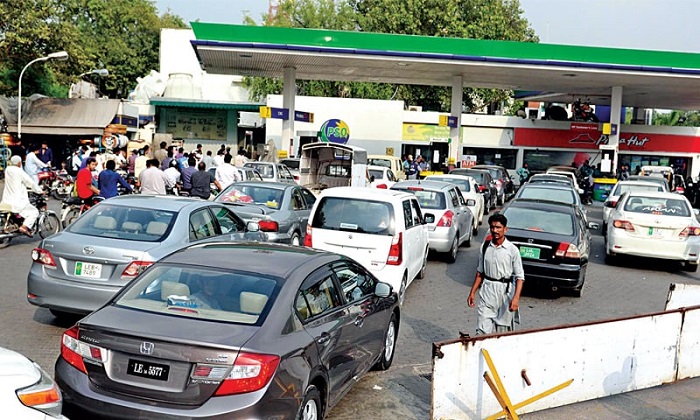

ISLAMABAD: Consumers in Pakistan may face another increase in petrol and diesel prices, with estimates indicating a potential hike of Rs 6.60 per liter for petrol and Rs 5.27 per liter for high-speed diesel (HSD) starting midnight of July 16, to be applicable for the next 15 days.
The anticipated price adjustment is being driven by international market fluctuations, currency exchange rate pressures, and government revenue targets.
Breakdown of Contributing Factors
The federal government is reportedly considering the imposition of a petroleum levy and carbon surcharge amounting to Rs78.02 per liter for petrol and Rs77.01 per liter for diesel. Additionally, the Inland Freight Equalization Margin (IFEM) has been estimated at Rs8.89 per liter for petrol and Rs6.04 for diesel.
Impact of exchange rate on petrol and diesel prices
Exchange rate fluctuations may also add an extra burden of Rs3 per liter for petrol and Rs2 for diesel, further contributing to the price revision. On the global front, Pakistan is currently paying a premium of $9.68 per barrel for petrol and $3.25 per barrel for diesel.
If the proposed changes are approved, petrol prices will increase from Rs266.79 to Rs273.39 per liter, while high-speed diesel will rise from Rs272.98 to Rs278.25 per liter.
Possible Relief in Other Fuel Categories
While petrol and diesel prices are expected to climb, kerosene and light diesel oil (LDO) may see modest reductions. Kerosene could drop by Rs3.74 per liter (2%), and LDO may fall by Rs2.23 per liter (1.3%), offering slight relief to consumers in rural and low-income areas.
Background and Next Steps
This would mark the second fuel price hike in July. On July 1, the federal government had already implemented a sharp increase in prices due to rising global oil rates and heightened geopolitical tensions, particularly between Iran and Israel.
Pakistan remains heavily reliant on fuel imports, sourcing approximately 85% of its petroleum products from abroad, with only 15% coming from crude oil imports for local refining.
The Oil and Gas Regulatory Authority (OGRA) is expected to submit its pricing recommendations to the Ministry of Finance on July 15, after which an official announcement is likely to follow.
