

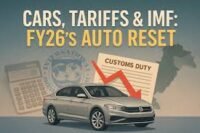

Pakistan’s Tariff Reforms: A Step Towards Affordable Cars
The Pakistan Institute of Development Economics (PIDE) has released a comprehensive report analyzing the government’s five-year tariff reform plan, announced in the Federal Budget 2025–26. This initiative aims to transition Pakistan’s economy from import substitution to an export-led growth model, with significant implications for the automobile industry.
Key Aspects of the Tariff Reform Plan
-
Reduction in Average Tariff Rates: The plan seeks to lower the average tariff rate from 19% to 9.5% by FY2030.
-
Automobile Sector Specifics: Tariffs on Completely Built Units (CBUs) will decrease from 20% to 15% over five years. Additionally, surcharges on used vehicles will be gradually removed by 2030.
-
Streamlining Customs Duty Structure: The number of tariff slabs will be reduced, and additional customs duties and regulatory duties will be phased out.
Implications for the Automobile Industry
PIDE’s analysis indicates that these reforms will introduce increased competition from imported vehicles, compelling local manufacturers to enhance quality and efficiency. While smaller or less competitive brands may face challenges, established and globally integrated firms are expected to adapt and thrive.
The reduction in tariffs on both CBUs and Completely Knocked Down (CKD) kits will lower production costs, potentially making vehicles more affordable and expanding car ownership in Pakistan.
Employment and Economic Considerations
In the short term, some jobs at Original Equipment Manufacturers (OEMs) may be at risk. However, new opportunities are anticipated in import services, dealerships, after-sales, and parts markets. The net effect will largely depend on how existing automobile firms respond to and adapt to the policy changes.
At the macroeconomic level, increased imports could raise Pakistan’s import bill, creating pressure on foreign exchange reserves and the exchange rate unless export growth keeps pace. Therefore, PIDE recommends that the government ensure the availability of the required foreign exchange to finance the increased import bill.
Recommendations for Policy Implementation
PIDE emphasizes the importance of maintaining the course of the tariff reforms and advises against rolling back the policy after initial challenges. Such a reversal could prove detrimental to both the automobile industry and consumers.
Additionally, PIDE suggests the development of a new import framework, particularly for the import of used cars, to replace the current mechanism. This would help uphold safety standards, ensure fair competition, and promote consumer welfare.
The report also advocates for the facilitation of a robust after-sales network and stronger incentives for electric vehicles (EVs) to ensure a smooth transition to an environmentally friendly future.
The tariff rationalization is not merely an industrial reform but also a vital step towards consumer protection, modernization of the auto sector, and Pakistan’s integration into global value chains. By fostering a more competitive and transparent market, these reforms aim to benefit consumers through improved choice, availability, and competitive pricing of vehicles.
