

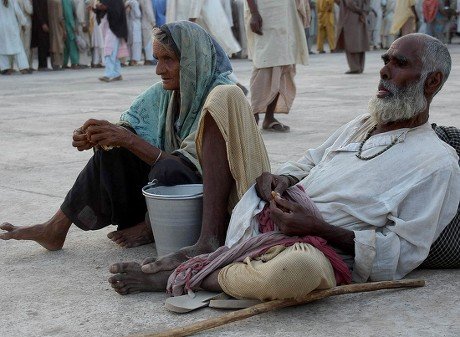

The Business of Begging in Pakistan: An Organized Underground Economy
Islamabad – August 2025
In the streets of Pakistan’s largest cities—Karachi, Lahore, Islamabad, and others—begging is not just a desperate cry for help. It has become a full-fledged underground industry, operated by organized networks that exploit poverty, compassion, and weak enforcement mechanisms to generate massive profits.
More Than Just Poverty
While Pakistan’s poverty rate remains alarmingly high—projected at 42.4% in 2025—the face of street begging goes far beyond genuine need. A large portion of beggars seen at traffic lights, marketplaces, shrines, and mosques are tied to criminal rings. These networks recruit, control, and exploit individuals to meet daily earning targets.
Commonly involved are:
-
Children, often trafficked or rented by gangs.
-
Women with infants, sometimes using drugged or borrowed babies.
-
Fake disability cases, where individuals pretend to be blind, injured, or paralyzed.
-
Addicts, who are given drugs in exchange for their day’s earnings.
-
Elderly and disabled persons, sometimes abandoned by family or coerced into begging.
This is not just about survival—it’s about control, manipulation, and profit.
The Economics of Begging
Authorities estimate that over 22 million Pakistanis are engaged in begging, both domestically and abroad. The collective annual earnings from this informal sector are believed to exceed Rs 42 billion. Most of this money ends up in the hands of gang leaders who control routes, assign locations, and demand a cut of each beggar’s income.
Daily income for an individual beggar can range between Rs 1,500 to Rs 5,000, depending on location and method. In some cases, beggars earn more than skilled workers—without paying taxes or rent—making it an attractive proposition for exploiters.
Begging as an Export
Begging is no longer confined within Pakistan’s borders. In the last year alone, over 5,400 Pakistani nationals were deported from countries like Saudi Arabia, Iraq, UAE, Oman, and Qatar for involvement in begging. Many of these individuals had entered these countries under the guise of pilgrimage, labor, or family visits.
This has become a recurring pattern: smugglers and agents help individuals travel abroad, often to beg in wealthier Muslim-majority countries during religious festivals, where donations surge.
Government Crackdown
In recent years, both provincial and federal authorities have attempted to address this issue:
-
In Punjab, a new law in 2025 declared begging a non-bailable offense, carrying fines of up to Rs 500,000 and jail terms up to five years.
-
The Federal Investigation Agency (FIA) has cracked down on “fake pilgrims” at airports—individuals posing as religious travelers with the intent to beg abroad.
-
Child welfare campaigns have ramped up. Authorities in Punjab have mandated DNA testing for adults found with children while begging to curb trafficking and forced exploitation.
-
Under the initiative “Project Jeevanjyot”, local governments are rescuing and rehabilitating child beggars—offering shelter, education, food, and medical assistance.
Despite these efforts, the system remains resilient—mainly due to its deep roots, poor implementation, and the public’s continued uncritical charity.
Why Begging Thrives
-
Widespread Poverty: With nearly half the population below the poverty line, genuine need does exist—but it’s often hijacked by criminal systems.
-
Organized Gangs: These networks rent babies, assign spots, and punish non-compliance.
-
Weak Law Enforcement: Arrests rarely lead to convictions, and many beggars are back on the streets within days.
-
Lack of Rehabilitation: Very few government-run shelters or programs exist to support beggars who genuinely want to escape the cycle.
-
Blind Charity: Well-meaning citizens give freely at traffic lights, unaware their money often funds exploitation.
Consequences
The long-term impact of organized begging includes:
-
Increased child trafficking and abuse.
-
Drug proliferation among street populations.
-
Loss of trust in public charity.
-
Dangerous conditions at intersections and public spaces.
-
International embarrassment, with deportations painting a poor image of Pakistan abroad.
