
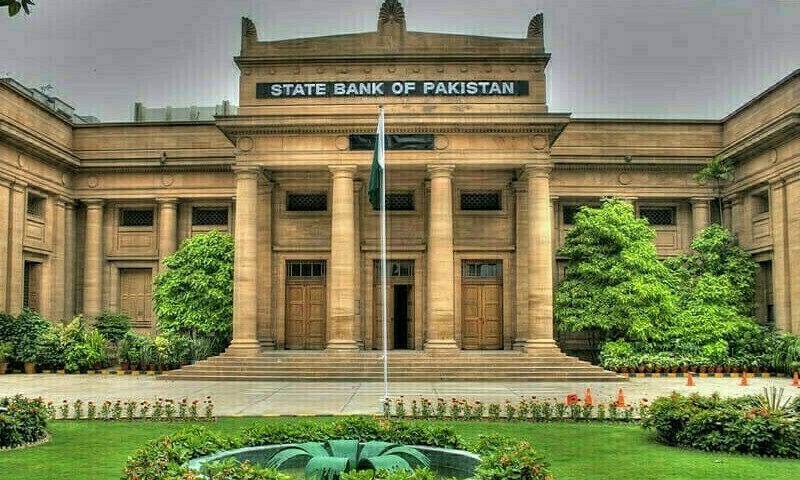

Pakistan’s central bank has decided to keep the policy rate unchanged at 10.5 percent. The decision came during the latest meeting of the Monetary Policy Committee.
Officials noted that recent economic data largely matched earlier projections. However, the war in the Middle East has created fresh uncertainty for the global economy.
Therefore, policymakers chose to maintain the current interest rate while monitoring evolving risks.
Middle East Conflict Raises Economic Concerns
The ongoing conflict in the Middle East has pushed global fuel prices higher. In addition, freight and insurance costs have increased sharply.
These developments may also affect international trade and travel. Consequently, policymakers believe the conflict’s duration and intensity will shape its economic impact.
Despite these risks, Pakistan’s economic fundamentals appear stronger than in earlier global crises.
Inflation conditions and foreign exchange buffers have improved compared with the period when the Russia–Ukraine war began in 2022.
However, officials acknowledge that risks to the economic outlook have increased significantly.
Inflation Shows Gradual Increase
Recent inflation data shows a modest upward trend. Consumer inflation rose to 5.8 percent in January and 7 percent in February 2026.
This increase partly reflects the fading of earlier base effects in food and energy prices. Additionally, adjustments in electricity charges for households contributed to rising prices.
Core inflation also increased slightly, reaching about 7.6 percent.
Policymakers believe improved food supply and favorable agricultural conditions may reduce some price pressures. Nevertheless, inflation risks remain due to global uncertainties.
Overall, officials expect inflation to remain above 7 percent during the rest of FY26 and into FY27.
Current Account and Foreign Reserves Improve
Pakistan’s external sector showed some positive developments. The current account recorded a surplus of $121 million in January 2026.
As a result, the deficit for July to January FY26 remained limited to $1.1 billion.
During this period, imports declined while exports and remittances stabilized. Workers’ remittances continued to finance a large portion of the trade deficit.
Foreign exchange reserves also improved. By February 27, reserves had reached $16.3 billion.
Authorities aim to increase reserves further to $18 billion by June 2026.
However, achieving this goal depends on the timely arrival of planned external financial inflows.
Economic Activity Shows Signs of Recovery
Economic activity has continued to strengthen across several sectors.
High-frequency indicators such as auto sales, cement dispatches, electricity generation, and petroleum sales recorded growth during July to January FY26.
Recent policy measures have also supported manufacturing.
These measures include:
-
Reduction in the Cash Reserve Requirement
-
Lower markup rates on loans for exporters
-
Reduced energy tariffs for the industrial sector
In agriculture, wheat sowing targets have largely been achieved. Moreover, favorable input conditions suggest a stable production outlook.
Growth in agriculture and manufacturing may also support the services sector. Wholesale trade, retail activity, and transportation often benefit from these developments.
Based on these trends, policymakers expect real GDP growth between 3.75 percent and 4.75 percent in FY26.
However, geopolitical tensions remain a key risk to this outlook.
Fiscal Challenges Continue
Fiscal data shows some improvement in government finances. The overall fiscal balance recorded a surplus, while the primary surplus remained close to last year’s level.
Lower interest payments helped contain government spending.
However, tax collection remains a concern.
During July to February FY26, tax revenues grew by 10.6 percent, which falls below the pace required to meet the annual target.
Therefore, policymakers emphasized the need for broader tax reforms and structural adjustments.
Such reforms will help strengthen macroeconomic stability and support sustainable economic growth.
Credit Growth and Money Supply Trends
Money supply growth has slowed slightly in recent months. Broad money growth declined to 16 percent by February 20.
This slowdown resulted mainly from reduced government borrowing from banks.
At the same time, increased foreign asset contributions supported overall liquidity.
Lower public borrowing and recent policy adjustments have created space for private sector lending.
Consequently, private sector credit increased by Rs790 billion by February 20.
Businesses in textiles, trade, and chemicals received significant credit expansion. Meanwhile, consumer financing also continued to rise.
Inflation Outlook and Future Risks
Policymakers believe inflation pressures could increase due to higher global energy prices. However, improved food supply may offset part of this pressure.
Stable inflation expectations among consumers also help limit second-round price effects.
Nevertheless, several risks remain.
These include volatile food prices, global geopolitical tensions, and possible adjustments in domestic energy prices.
Therefore, policymakers will continue monitoring economic developments closely.
Balancing Stability and Growth
The decision to maintain the policy rate reflects a cautious economic strategy.
Authorities aim to preserve price stability while supporting gradual economic recovery.
Strong fiscal discipline, structural reforms, and stable inflation expectations will remain essential.
As global uncertainty persists, policymakers will continue evaluating economic indicators before making future monetary decisions.

