


On October 26, 2023, Pakistan’s Foreign Minister, Jalil Abbas Jilani, led the Pakistani delegation at the Shanghai Cooperation Organisation Council of Heads of Government Meeting (SCO-CHG) held in Bishkek. The Council of Heads of Government serves as the second-highest forum within the SCO, primarily concentrating on enhancing cooperation among member states in socio-economic, trade, and financial domains.
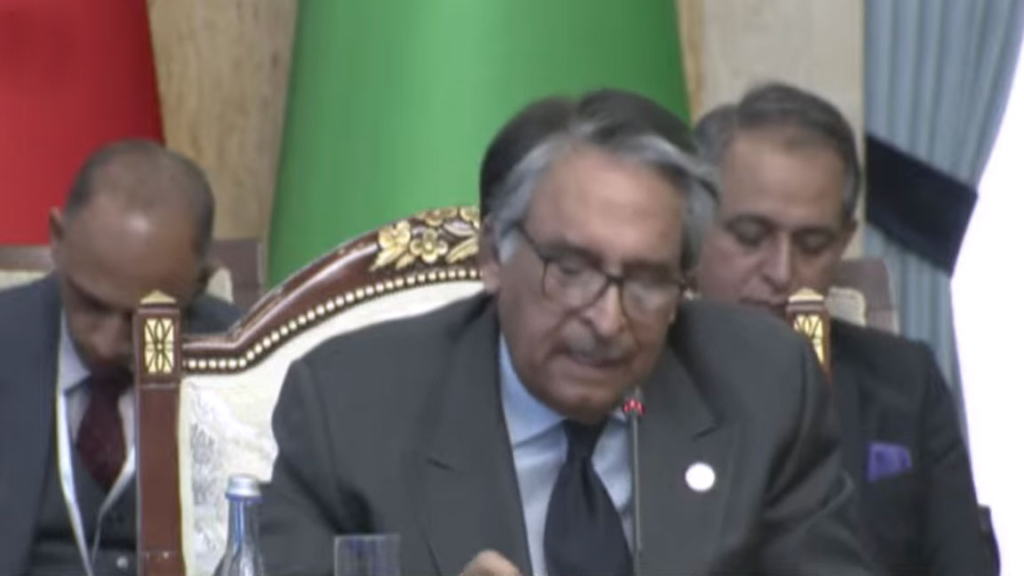
During the event in Bishkek, the Foreign Minister engaged with several high-ranking officials, including the President of the Kyrgyz Republic, the Prime Minister of Tajikistan, the Vice President of Iran, the Foreign Minister of the Kyrgyz Republic, the Deputy Chair of the Cabinet of Turkmenistan, and the Secretary General of SCO. These discussions encompassed a wide spectrum of bilateral cooperation areas and regional collaboration for shared prosperity.
In his address at the SCO-CHG meeting, the Foreign Minister reiterated Pakistan’s steadfast commitment to the “Shanghai Spirit,” underscoring the significance of mutual trust and a collective vision for prosperity and development. He presented Pakistan’s standpoint on issues related to transportation and regional connectivity, regional cooperation in youth empowerment, poverty alleviation, climate change, and disaster relief.
The Joint Communiqué issued at the meeting represents the shared vision of SCO Member States on various subjects, including the economy, trade, climate change, finance, industry, investment, transportation, customs, intellectual property rights, information and communication technology, innovation technology, energy, agriculture, food security, healthcare, and cooperation in humanitarian and cultural aspects.
Additionally, Pakistan has taken over the Chair of the Council of Heads of Government for the year 2023-2024. As the chair of the SCO, Pakistan will strive for collective prosperity and development, upholding the principles of the SCO Charter. These efforts will center on practical cooperation to enhance connectivity, transport infrastructure, empower youth, alleviate poverty, and invest in promising sectors such as agriculture, mining, minerals, energy, and information technology.
