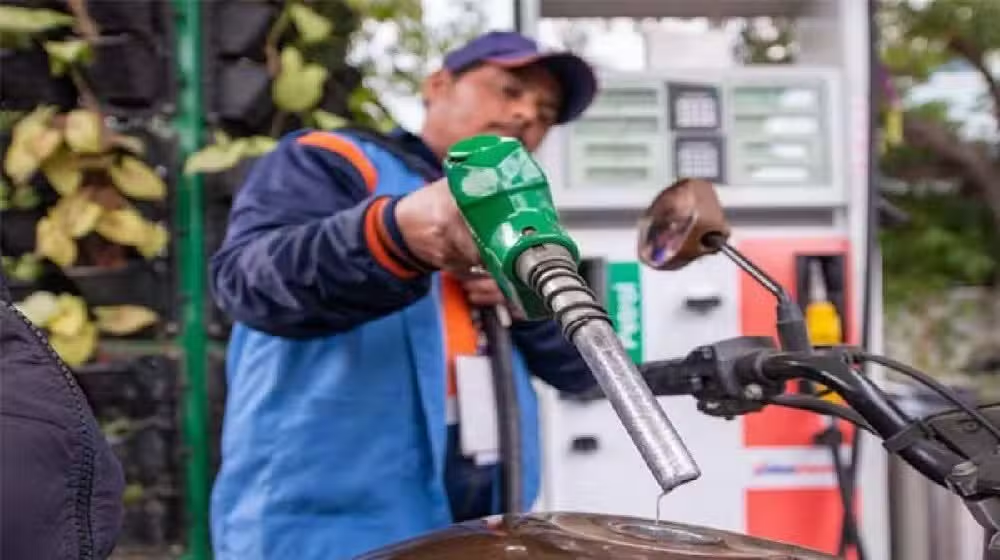
Islamabad: Pakistan’s federal government is considering lifting the freeze on petrol and diesel prices as global oil rates surge, widening the gap with domestic pricing. Officials said the current policy has become increasingly difficult to sustain due to mounting fiscal pressure and pending International Monetary Fund (IMF) programme reviews.
At the same time, policymakers are exploring targeted subsidies for two- and three-wheeler owners to shield low-income groups. A special cabinet committee, formed by Prime Minister Shehbaz Sharif, reviewed proposals to replace broad price controls with more focused relief measures.
Meanwhile, the government has already raised prices of other fuels. Official data shows jet fuel (JP-1) jumped by Rs. 84 per litre, or 22%, to Rs. 472, while kerosene rose by Rs. 71 per litre, or 20%, to Rs. 429 within a week. Since early March, jet fuel prices have surged nearly 150%, and kerosene about 127%, reflecting global market volatility linked to the US–Israel conflict with Iran.
However, petrol and diesel prices remain frozen after a previous Rs. 55 per litre increase. The government has allocated around Rs. 69 billion in subsidies and is currently absorbing about Rs. 175 per litre on diesel and Rs. 75 on petrol. Officials warned that delaying adjustments could lead to sharper inflation later.
Consequently, higher jet fuel prices have pushed up airfares, with domestic tickets rising by Rs. 10,000 to Rs. 15,000 and international fares by Rs. 30,000 to Rs. 40,000. Airlines have also added fuel surcharges between $10 and $100.
Additionally, disrupted regional airspace has increased operating costs, forcing longer routes. Around 325 Pakistani flights have been cancelled, including nearly 200 by PIA. Exporters also face higher cargo charges, raising concerns over perishable goods shipments.