

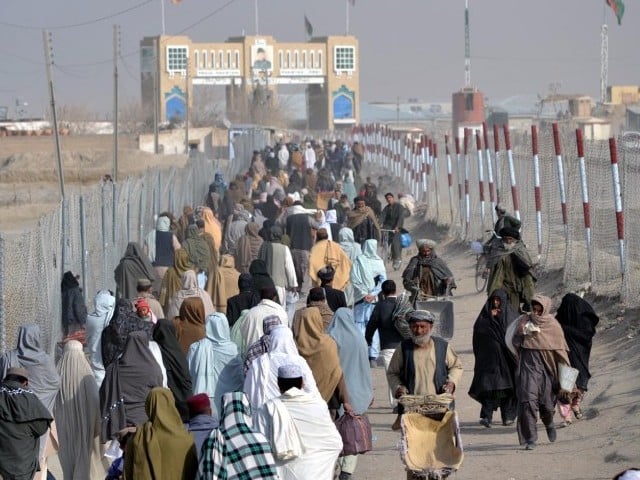

Interior Ministry Instructs Provinces to Launch Deportation Under Illegal Foreigners Repatriation Plan
PESHAWAR: The federal government has formally notified all provincial administrations that the repatriation and deportation of over 1.3 million Afghan refugees holding Proof of Registration (PoR) cards will begin on September 1, 2025, marking a significant shift in Pakistan’s refugee policy.
In a letter dated August 4, the Ministry of Interior informed the chief secretaries and police heads of all four provinces, Gilgit-Baltistan, and Azad Jammu and Kashmir that PoR cardholders are now considered illegal residents. Their status expired on June 30, following a prior announcement by the ministry on July 31.
The letter emphasized that the voluntary return of PoR cardholders will start immediately, while formal deportation under the Illegal Foreigners Repatriation Plan (IFRP) will commence on the set September date. The repatriation of Afghan Citizen Card (ACC) holders and other undocumented foreigners will continue under earlier directives.
The ministry directed the Ministry of SAFRON, Kashmir Affairs, and Gilgit-Baltistan to share PoR databases with provincial and local committees. The National Database and Registration Authority (NADRA) will facilitate deregistration at border crossings, while the Federal Investigation Agency (FIA) will assist in repatriation logistics.
Transit Points, Local Mapping, and UNHCR Concerns
A provincial steering committee in Khyber Pakhtunkhwa met on Monday to discuss IFRP’s implementation. The committee instructed local administrations and police to hold jirgas with Afghan community elders to encourage voluntary returns. It also called for reactivation of Peshawar and Landi Kotal transit points, and tasked deputy commissioners with remapping PoR holders.
The UNHCR, however, has voiced serious concern over the forced return of registered refugees, warning it violates the principle of non-refoulement. In a recent statement, the agency said it has received reports of arrests and detentions of Afghans, including those with valid PoR cards.
The Pakistani government, along with the UNHCR, had initially issued PoR cards to Afghan refugees in 2004–05, and later introduced ACC cards in 2016 under amended immigration laws. As of June 30, 2025, UNHCR figures show 1.3 million Afghan refugees remain in Pakistan, with the majority living in Khyber Pakhtunkhwa and Balochistan.
