


India Accused of Systematic Oppression and Violating UN Resolutions on Kashmir
At the United Nations, Pakistan launched a powerful response to what it described as India’s “recycled script of distortions” regarding the status of Jammu and Kashmir. Speaking at the 4th Committee Meeting on Decolonisation, Pakistani diplomat Asif Khan exposed India’s continued denial of international obligations and human rights abuses in the disputed region.
Khan stated that India’s attempts to mislead the global community on Kashmir had failed. “The United Nations has not only the right, but the obligation to discuss the Jammu and Kashmir dispute,” he asserted. He reminded the forum that the region has never been legally integrated into India and remains an internationally recognised disputed territory, awaiting resolution through a UN-mandated plebiscite.
Highlighting India’s broken commitments, he recalled that it was New Delhi itself that first took the Kashmir issue to the UN Security Council. Yet now, he said, India refuses to honour its promises under international law and the UN Charter.
Pakistan Highlights Military Occupation, State Terrorism, and Demographic Changes in Kashmir
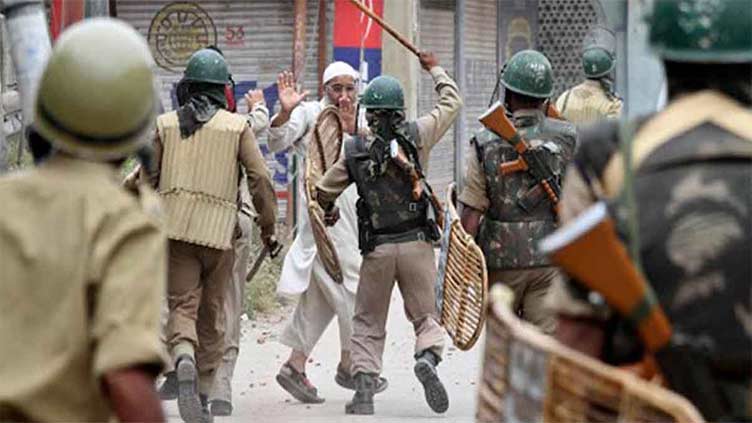
Asif Khan denounced India’s ongoing military presence in Kashmir, calling it one of the “densest military occupations in the world,” with nearly 900,000 troops deployed against an unarmed civilian population. He accused Indian forces of extrajudicial killings, enforced disappearances, mass arrests, and sexual violence.
The Pakistani representative also condemned India’s alleged settler-colonial policies, stating that since the revocation of Article 370 in August 2019, India has accelerated demographic engineering in violation of the Fourth Geneva Convention. He described these actions as part of a broader plan to suppress the Kashmiri freedom movement.
Khan further accused India of sponsoring terrorism in the region. He said India backs terrorist groups like the TTP, BLA, and Majeed Brigade—responsible for attacks that have killed thousands in Pakistan. India, he said, had earned the “dubious distinction” of engaging in extraterritorial assassinations.
Describing India’s democracy as “hollow,” Khan criticised the RSS-BJP ideology, saying it had turned Islamophobia and minority persecution into official state policy. He pointed out that international human rights organisations have repeatedly documented India’s systemic abuses.
He warned that India’s “reckless behaviour,” including unprovoked aggression against Pakistan earlier this year, has put regional peace at risk. Pakistan, he said, responded within its rights under Article 51 of the UN Charter and inflicted “significant losses” on India.
Concluding his remarks, Khan declared: “India’s denials and distortions cannot erase the simple truth—Jammu and Kashmir remains a disputed territory.” He reaffirmed Pakistan’s unwavering support for the Kashmiri people’s right to self-determination and vowed to continue exposing India’s actions at every global platform.
