

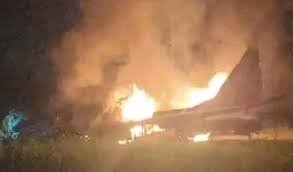

In a swift and decisive move, Pakistan’s military has shot down two Indian aircraft in retaliation to India’s missile strike on Pakistani territory. The attack, which was launched from within Indian airspace, prompted a strong response from Pakistan’s armed forces.
Pakistan’s Armed Forces Respond to Indian Aggression
According to military sources, all Pakistani aircraft are safe, and the country’s airspace remains secure. The retaliation came after India’s missile strike, which targeted several areas within Pakistan, including Kotli, Muzaffarabad, Ahmedpur Sharqia Bagh, and Muridke. Pakistan’s Director General of Inter-Services Public Relations (ISPR), Lieutenant General Ahmed Sharif Chaudhry, confirmed that the attack would not go unpunished, stating, “Pakistan will respond at a time and place of its choosing.”
The Pakistani Air Force acted quickly, activating defense systems and preventing any Indian aircraft from penetrating Pakistani airspace. “This cowardly attack will not be tolerated, and we will give a befitting response,” Lt. Gen. Chaudhry added.
Pahalgam Attack and Its Aftermath
The recent escalation follows the Pahalgam attack on April 22, 2025, which killed 26 people, mostly tourists. India accused Pakistan of being involved in the attack, but no evidence was provided. Indian Prime Minister Narendra Modi vowed retribution and declared that India would identify and punish those responsible.
In response to the attack, India implemented several retaliatory measures, including barring Pakistani ships from docking at Indian ports, imposing a complete ban on Pakistani imports, and suspending postal services with Pakistan. India also closed its airspace to Pakistan and announced the suspension of the 1960 Indus Waters Treaty, which governs water-sharing between the two countries. Diplomatic ties were further downgraded with India declaring defense advisors in the Pakistani High Commission in New Delhi as “persona non grata.”
Pakistan retaliated by suspending all trade with India and warning that any violation of the Indus Waters Treaty or further military action would lead to a proportional response.
Heightened Tensions and International Reactions
The tensions between the two nuclear-armed neighbors have continued to escalate, with both sides exchanging sharp rhetoric. Pakistan’s government has briefed political parties on the national security situation, while India’s Defense Minister, Rajnath Singh, warned of a strong response to any threat against India.
The crisis has also sparked international concern, with Iran’s Foreign Minister offering to mediate and help defuse the situation. The standoff remains volatile, with ongoing diplomatic and trade repercussions, and the international community urging both countries to exercise restraint and seek a peaceful resolution.
