

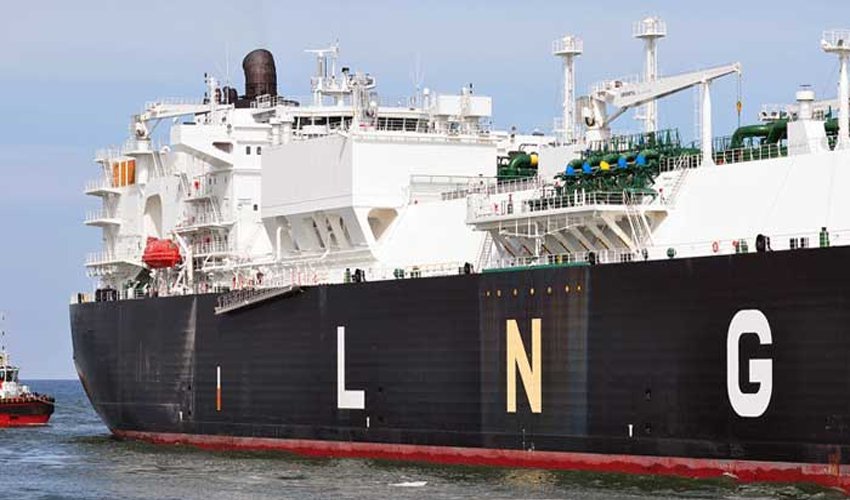

ISLAMABAD: Federal Minister for Petroleum Ali Pervaiz Malik has warned that Pakistan could face a surplus of imported Regasified Liquefied Natural Gas (RLNG) if the power sector fails to lift its committed volumes, adding that the government is actively exploring alternatives—such as supply diversion—to avoid accumulating excess stocks.
“There will be no RLNG surplus if the power sector meets its committed offtake,” Malik stressed, underscoring the urgent need for better coordination across the energy value chain.
Malik also called for a merit-based composition of the Cabinet Committee on Energy (CCOE), advocating for representation from key ministries including Finance, Power, and Petroleum. “Appointments should be made based on competence, not personal preference,” he said.
U.S. Oil Imports & Iranian Smuggling Insights
On the possibility of importing U.S. crude oil, Malik said the government would approach it with “an open mind,” noting that WTI crude is currently more affordable than Brent, the prevailing international benchmark.
He also highlighted the impact of border tensions with Iran, which led to a sudden rise in legal fuel consumption in Balochistan — a stark indicator of previous fuel smuggling.
“In June 2024, Balochistan consumed 8,500 tonnes of oil in a month. After the border closure in June 2025, that volume was consumed in just one week,” he revealed. Malik said he has requested the Oil and Gas Regulatory Authority (OGRA) to provide a detailed report on Iranian oil smuggling.
The government, he added, is also assessing potential waivers for oil and gas imports from Iran amid ongoing regional tensions. Meanwhile, Pakistan and Iran are continuing arbitration in Paris over the long-delayed Iran-Pakistan (IP) gas pipeline.
LNG Contracts and Sector Challenges
Addressing complications in the LNG sector, Malik admitted that Pakistan’s second LNG contract with Qatar had contributed to the current crisis.
“Had that agreement not been signed, we might not be facing today’s gas sector default,” he said, pointing to the suspension of 300 million cubic feet per day (mmcfd) of domestic gas production as a direct consequence.
Gas Tariffs and IMF Conditions
Defending the recent increase in fixed gas charges, Malik said the hike was necessary due to mounting financial pressures.
“We are providing Rs150 billion in subsidies to protected consumers and have diverted Rs250 billion worth of RLNG from power to domestic use,” he explained. “Under the IMF program, we’re required to maintain zero fiscal deficit.”
He voiced support for the creation of a unified Energy Ministry, but emphasised that the Petroleum Division must retain a central role in policy-making.
Investment Outreach and Strategic Partnerships
On the geopolitical front, Malik said Pakistan had extended equal investment invitations to China, Russia, and the United States in the country’s growing mining sector.
“We’re offering a level playing field,” he stated, rejecting any notion of preferential treatment.
