

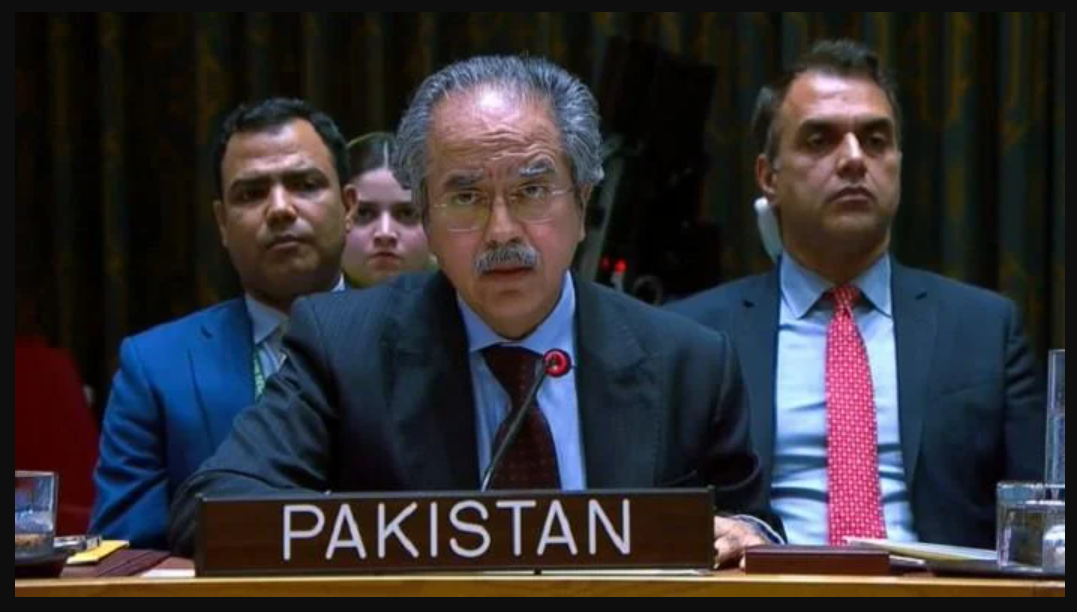

Pakistan has reaffirmed its strong commitment to United Nations peacekeeping operations amid a deepening funding crisis. The warning comes as financial shortfalls threaten global peace missions.
Asim Iftikhar Ahmad, Pakistan’s Permanent Representative to the United Nations, highlighted the seriousness of the situation. He stressed that liquidity constraints now directly affect operational effectiveness.
Speaking at the Special Committee on Peacekeeping Operations, he emphasized that peacekeeping remains indispensable for global security. However, mounting political, operational, and financial pressures demand urgent collective action.
UN Funding Crisis Raises Alarm
The financial crisis has intensified in recent months. By the end of 2025, unpaid dues reached a record $1.57 billion. Consequently, program delivery and peace operations face growing risks.
Antonio Guterres warned that the organization could face imminent financial collapse. He urged member states to pay their dues fully and on time. Moreover, he called for reforms to budget rules that complicate cash management.
A controversial requirement forces the UN to return unspent funds annually. This rule applies even when the organization lacks sufficient cash reserves. Therefore, officials seek urgent reforms to prevent deeper instability.
Impact on Peacekeeping Missions
Pakistan cautioned that financial constraints already undermine mandate delivery. These include protection of civilians, deterrence against violence, and peacekeeper safety.
Ambassador Iftikhar warned that shrinking missions without strategic clarity could weaken readiness. As a result, standby arrangements and rapid deployment capabilities may suffer. Specialized units could also face operational delays.
He stressed that lack of political progress should not justify mission withdrawals. Instead, missions must maintain focus on ceasefire monitoring and civilian protection.
Pakistan’s Longstanding Contribution
Pakistan remains one of the largest and longest-serving troop contributors. The country hosts the United Nations Military Observer Group in India and Pakistan, one of the oldest UN peacekeeping missions.
Over six decades, more than 250,000 Pakistani personnel have served in 48 missions across four continents. Additionally, 182 Pakistani peacekeepers sacrificed their lives under the UN flag.
This legacy underscores Pakistan’s sustained dedication to international peace and security.
Reform and Future Direction
Pakistan supports reform efforts to improve mission agility and effectiveness. The envoy emphasized the need for stronger partnerships and better use of technology.
Meanwhile, Secretary-General Guterres has launched reform initiatives to cut costs and improve efficiency. The approved 2026 regular budget is lower than the previous year’s allocation. However, funding gaps persist.
The financial strain coincides with broader geopolitical shifts. For instance, some major contributors have reduced payments and voluntary funding. Consequently, humanitarian needs continue to rise while resources decline.
Call for Collective Responsibility
UN leadership insists that member states must meet their financial obligations. Officials argue that timely payments could resolve much of the liquidity problem.
Pakistan has reiterated that peacekeeping operations remain central to global stability. Therefore, sustained funding and strategic reform are essential.
In conclusion, Pakistan’s renewed commitment signals strong support for multilateral peace efforts. Yet, without immediate financial solutions, UN peacekeeping missions may face serious operational constraints.
