



ISLLAMABAD: Special Assistant to the Prime Minister on Health Dr Faisal Sultan has written a letter to British Health Secretary Sajid Javid, comparing Pakistan’s pandemic statistics with those of other countries in the region and highlighted “obvious discrepancies” regarding red-list and amber-list.
Federal Human Rights Minister Shireen Mazari shared the letter of SAPM on Twitter, wherein Dr Faisal suggested that in order to reduce the health risk associated with travel during the pandemic, the UK may shift attention towards “interventions focused directly on traveller, rather than on other metrics”.
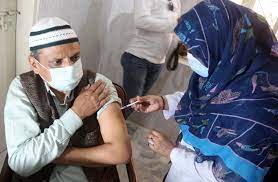
He proposed a three-pronged approach — including a “valid proof of having received a WHO (World Health Organisation) approved Covid-19 vaccine, a PCR (polymerase chain reaction) test (72 hours prior to departure) and a rapid antigen test at the airport, pre-departure” — as a measure to curb the risk of virus spread through travel instead of the British government’s traffic light system.
The UK operates a traffic light system for international travel, with people from low-risk countries rated green for quarantine-free travel and medium risk countries rated amber while people from red countries’ people are required to spend 10 days in isolation in a hotel.
Pakistan was placed on the red list in early April and India on April 19 due to the rising number of cases in both the countries after emergence of the Delta variant.
In a recent update issued by the British government earlier this month, India, Bahrain, Qatar and the United Arab Emirates were shifted the amber list from August 8 while Pakistan was retained on the red list. Several British parliamentarians have lambasted their government in UK for its bizarre decision of keeping Pakistan on the red-list despite very low Covid ratio.

The decision had raised eyebrows, provided that India has been witnessing a significantly higher number of infections than Pakistan, and some had gone on to say that the decision was “political” and not led by scientific data.
Britain, however, has attributed the move to a “combination of deteriorating epidemiological situation, combined with low testing rates and limited genomic surveillance” in Pakistan.
In a statement issued by the UK Department of Health and Social Care — also shared by Mazari on Twitter — the British authorities maintained that the aforementioned factors present “a high risk that an outbreak of a new variant, or existing VoC (variants of concern), will not be identified before it is imported to the UK”.
The authorities also raised concern over the “current trajectory of the pandemic in Pakistan”, which is currently experiencing a fourth wave of the coronavirus.
