

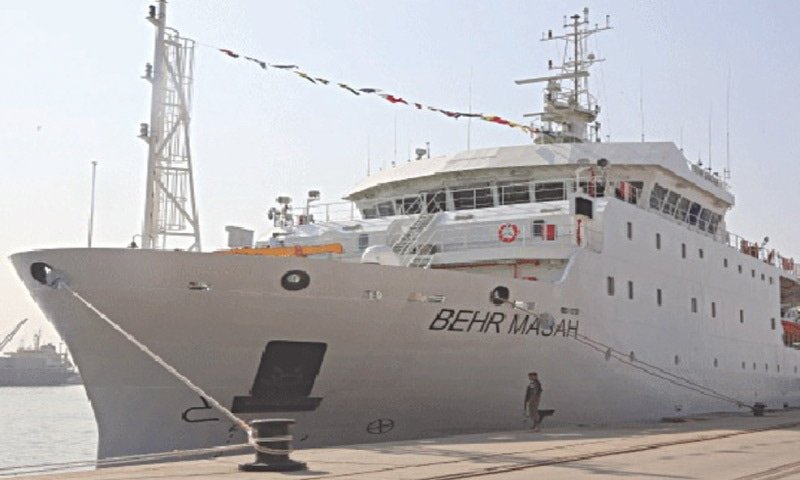

ISLAMABAD: The Pakistan Navy, through its National Hydrographic Office, is facilitating a Pakistan-China Joint Oceanographic Cruise, officials confirmed on Tuesday. The initiative highlights growing scientific cooperation between Islamabad and Beijing while strengthening maritime research in regional waters. Moreover, the navy has deployed PNS Behr Masah to support the mission, which the National Institute of Oceanography is conducting in collaboration with China’s Second Institute of Oceanography.
According to naval officials, PNS Behr Masah serves as a dedicated hydrographic survey vessel with the capability to conduct detailed oceanographic and geophysical surveys. Consequently, the platform enables researchers to gather accurate data from Pakistan’s coastal and offshore areas. In a statement, the navy reaffirmed its commitment to promoting maritime awareness and facilitating marine scientific research across the country.
Joint research to enhance marine understanding
The joint cruise represents a major scientific collaboration aimed at improving understanding of Pakistan’s marine environment. As a result, researchers expect the findings to expand knowledge of coastal and offshore dynamics while supporting informed maritime planning and policymaking. Furthermore, enhanced data collection will help assess long-term environmental trends affecting regional waters.
The NIO confirmed that Pakistan and China signed a Letter of Agreement on joint cruises for marine environment and ecosystem research in Pakistan’s coastal areas on December 12, 2025, in Hangzhou. Subsequently, the agreement launched a framework for collecting marine environmental and ecosystem data during all four seasons.
Capacity building and scientific cooperation
Under the initiative, senior representatives from both institutions will collaborate on marine ecosystems, coastal processes, climate change, and sustainable ocean resource use. Additionally, Pakistani scientists will analyze samples in Chinese laboratories due to limited advanced facilities at home. The programme will also provide training in equipment operation, onboard data collection, and post-cruise laboratory analysis, strengthening national research capacity.
