


ISLAMABAD: In a move fraught with potentially severe consequences, India unilaterally suspended the Indus Waters Treaty (IWT) with Pakistan, citing Islamabad’s alleged involvement in a deadly attack in Indian Illegally Occupied Jammu and Kashmir (IIOJK). The decision came in the wake of the April 22 massacre in Pahalgam, Anantnag district, where 26 people, including tourists, were killed.
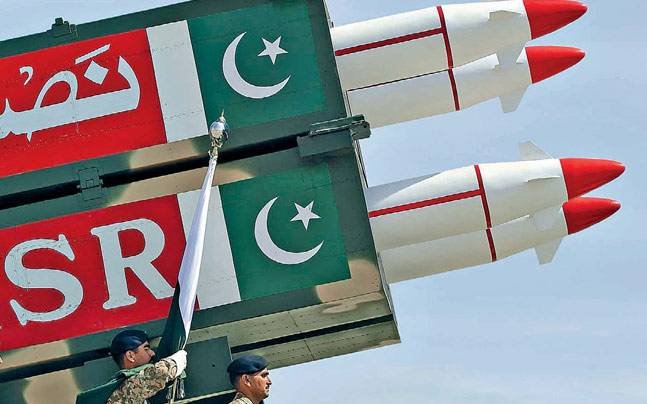
Pakistan, strongly rejecting India’s accusations, has warned that any attempt to halt or divert water flow governed by the IWT will be regarded as an “act of war” and met with a full-spectrum response, including the use of both conventional and non-conventional force.
Experts believe Pakistan would not hesitate to use military means, including nuclear deterrence, to defend its water rights. One defence expert noted, “If India proceeds to construct facilities aimed at altering Pakistan’s water flow, those structures will be targeted militarily. The term ‘complete spectrum of national power’ includes all available means, including nuclear capabilities.”
Experts have also criticized India’s decision as political posturing aimed at appeasing domestic sentiment rather than a practical policy shift.
The IWT, signed in September 1960 with the World Bank as a broker, has long been seen as a rare model of cooperation between the hostile neighbours. It defines the allocation and management of the waters of the Indus River system and has remained intact despite decades of military and political tensions.
India’s Cabinet Committee on Security (CCS) announced the suspension of the treaty in what experts are calling the most provocative move since the agreement’s inception. It is part of a broader set of retaliatory measures following the Pahalgam incident, aimed at increasing diplomatic and strategic pressure on Pakistan.
For Pakistan, a country whose agriculture relies almost entirely on the Indus River system, the implications could be dire. Experts say any disruption to the treaty could exacerbate water shortages, affect crop yields, and potentially spark food insecurity and internal unrest.
In the short term, India may withhold crucial hydrological data concerning rivers flowing into Pakistan—information that becomes especially critical during the monsoon season when flood risks surge.
Islamabad, however, dismissed India’s declaration, asserting that the IWT is a binding international agreement and cannot be altered unilaterally. A statement issued after a meeting of Pakistan’s National Security Committee (NSC) described water as a “vital national interest” and vowed to protect it at all costs.
“Any attempt to stop or divert the flow of Pakistan’s water, in violation of the Indus Waters Treaty, will be considered an act of war and met with full force across the entire spectrum of national power,” the NSC warned.
Strategic analysts have interpreted this as a clear message that Pakistan would not………. Jamaat Ali Shah, a former Pakistani commissioner for Indus Waters, stated that neither country can suspend or revoke the treaty unilaterally.
“The Indus Waters Treaty is a permanent agreement. Any modification, suspension, or revocation requires mutual consent,” he explained, adding that India would have to consult Pakistan to lawfully alter the treaty.
Analysts believe India may use this suspension as a pretext to accelerate long-stalled hydroelectric and storage projects along the western rivers—such as Pakal Dul, Ratle, Kiru, and Sawalkot—which have faced delays due to Pakistan’s objections under the IWT framework.
As tensions rise, observers fear the dispute over water—already a contentious issue—could escalate into a major conflict unless international actors step in to de-escalate the situation and uphold the sanctity of the treaty.
