

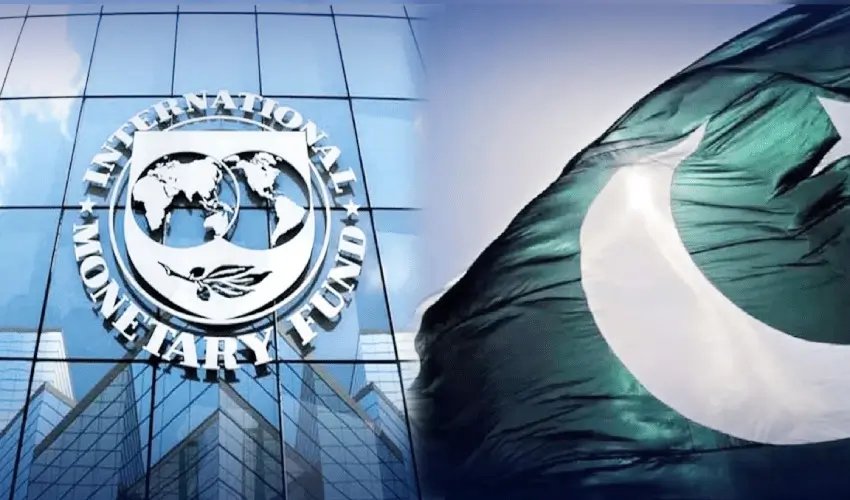

Islamabad faces a significant challenge as Pakistan struggles to achieve its financial goals in the current year. The primary issue at hand is fiscal consolidation and reforms. This comes amid a weak coalition government and political instability resulting from allegations of electoral fraud, according to the Washington-based Institute of International Finance.
In contrast, factors such as exchange rates, monetary policies, energy subsidies, and state-owned enterprise reforms are not expected to hinder the implementation of the new IMF program. This optimistic outlook is due to significant advancements made in these areas over the past year, as stated by the IIF, a prominent global organization encompassing the world’s leading commercial and investment banks, insurance companies, and investment management firms.
According to the IIF, the most significant obstacle arises from fiscal consolidation. They emphasize this matter’s significance, as substantial fiscal deficits have caused public debt to rise from 55% of GDP in the 2009-10 fiscal year to 79% in 2022-23.
The Institute of International Finance (IIF) reported that the overall fiscal deficit is now estimated at 8.1% of GDP, with a primary deficit of 0.2% of GDP. This information aligns with a Ministry of Finance report, which revealed that the seven-month fiscal deficit increased to 2.6% of GDP (Rs2.721 trillion) from 2.3% of GDP (Rs1.974 trillion) in the previous year. Despite this, controlled primary expenditures contributed to an improved primary surplus, rising to Rs1.939 trillion from Rs945 billion in the previous year.
The international financial organization identifies fiscal consolidation and reforms as the ‘greatest hurdles’ in the face of a fragile alliance and political instability.
According to the IIF, the combination of past examples and a politically fragile administration has shifted the risks towards negative outcomes. It is likely that the projected Rs9.4 trillion tax revenue goal may not be achieved, and reducing additional spending and substantial subsidies could prove challenging. The IIF predicts a primary deficit of 0.3%.
‘Turbulent politics to add to risks’
The Institute of International Finance (IIF) stated that Pakistan’s politics, marked by instability and turmoil, will increase the challenges the country faces. Factors contributing to this situation include contentious elections, characterized by cellular service suspensions, significant delays in announcing results, widespread protests, a fatal bombing, and the failure to assign reserved seats for PTI-supported independents, all of which have heightened internal tensions.
It is evident that Imran Khan holds the title of the most popular politician in Pakistan, which places him in opposition to the influential military forces in the country.
The report forecasted that the conflicts between the two parties would likely intensify, potentially resulting in a renewed intense military clampdown on politicians and sympathizers backed by PTI. Furthermore, the report highlighted the fragile composition of the coalition government.
“The PPP appears hesitant to endorse reforms with potential political consequences. Without their backing, it becomes challenging for the PML-N to progress, potentially delaying or extending discussions with the IMF, as per the IIF’s statement.”
The statement highlighted that the past patterns were not favorable for the government or the introduction of a new IMF program. It mentioned that no prime minister in Pakistan has completed their full five-year term, and the country has been involved in its 23rd IMF program since 1958. This dismal history does not seem to be improving in the near future.
Approximately $90 billion of public debt is slated to mature in the fiscal year 2024, with a significant portion anticipated to be rolled over, as mentioned by the IIF.
The intricate financial situation underscores the necessity of a new IMF program, particularly given that nations like Saudi Arabia, the UAE, and China, which have previously assisted Pakistan with official loans, are now linking their financing to the implementation of an IMF program.
