

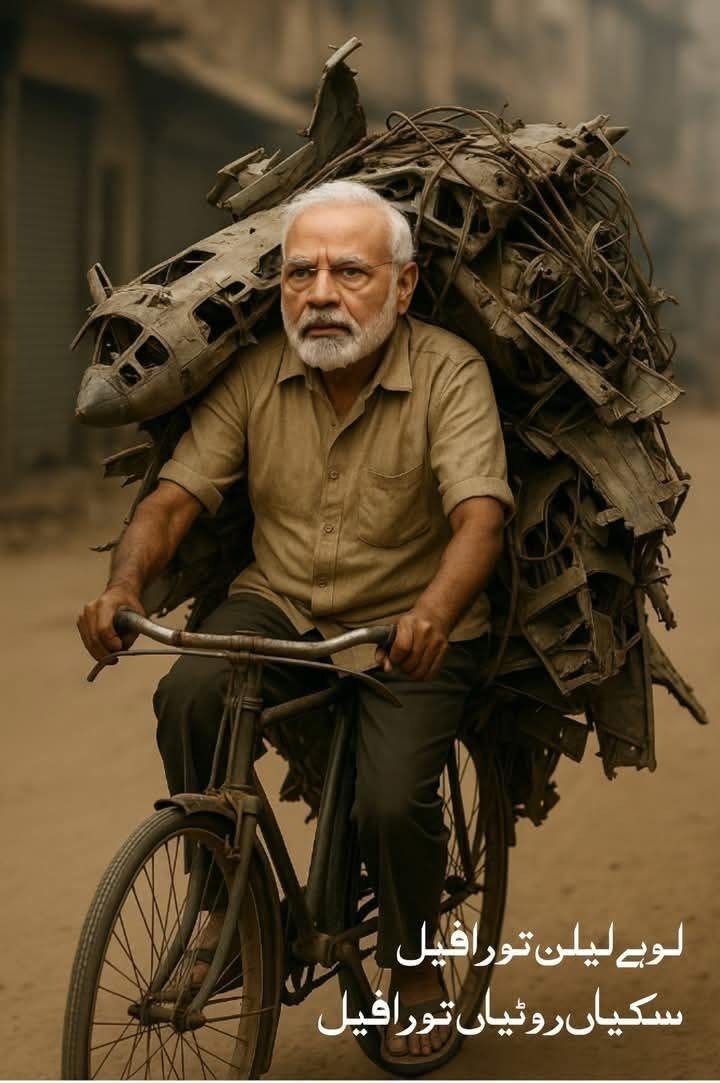

Pakistan has called on global powers to intervene in resolving longstanding disputes with India, particularly over Kashmir and water rights, in the wake of heightened tensions following a recent military conflict.
The appeal was made by Pakistan Peoples Party (PPP) leader and former Foreign Minister Bilawal Bhutto Zardari during his visit to London, where he held a series of high-level meetings and public engagements aimed at presenting Pakistan’s narrative on the conflict.
Bilawal is leading a diplomatic delegation tasked with countering what he described as “unsubstantiated allegations” from India. The delegation has already visited the United States, is currently in London, and is scheduled to travel to Brussels as part of its global outreach efforts.
The team includes former foreign ministers Hina Rabbani Khar and Khurram Dastgir, Senators Sherry Rehman, Musadik Malik, Faisal Subzwari, and Bushra Anjum Butt, along with veteran diplomats Jalil Abbas Jilani and Tehmina Janjua.
Speaking to Pakistani media in London, Bilawal asserted that Pakistan had “the upper hand” during the recent skirmish but agreed to a ceasefire under the condition that all contentious issues would be addressed through future dialogue at a neutral venue. “We locked 20 Indian jets, downed six, and showed restraint for the sake of peace,” he claimed. “Pakistan demonstrated strength and responsibility. We hope the international community, especially the U.S. and U.K., will now push India toward meaningful dialogue.”
Bilawal expressed confidence that U.S. mediation had helped secure the ceasefire and voiced hope that former President Trump and his administration would uphold promises to facilitate future negotiations. He emphasized that peace in South Asia begins with a resolution of the Kashmir conflict. “The path to resolving all disputes starts from Kashmir,” he said.
At public forums including Chatham House and the International Institute for Strategic Studies (IISS), Bilawal criticized India’s actions as violations of Pakistan’s sovereignty, international law, and the UN Charter. He described the Kashmir issue as the “principal stumbling block to lasting peace in the region” and called for international pressure to reignite stalled talks.
He also condemned India’s unilateral decision to suspend the Indus Waters Treaty, warning that the “weaponization of water” poses a serious threat to regional stability. “Such actions undermine international norms and set a dangerous precedent,” he said, urging the global community to hold India accountable.
“Pakistan is a responsible nuclear state,” he added. “We have made it clear that halting water flows will be treated as an act of war.”
The delegation has also held meetings with British officials and members of Parliament to garner international support for dialogue and conflict resolution.
