

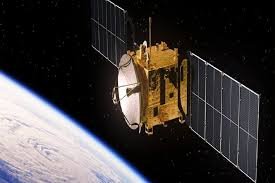

ISLAMABAD: Pakistan achieved a significant milestone in space research on Thursday with the successful launch of its advanced remote sensing satellite KZ-1A/PRSC-S1, developed by SUPARCO in collaboration with China. The satellite was launched from the Xichang Satellite Launch Centre, marking a new chapter in Pakistan’s journey towards space self-reliance under the National Space Policy and Vision 2047.
The launch ceremony was broadcast live from SUPARCO headquarters in Karachi, where officials and scientists celebrated what has been hailed as a turning point in the nation’s technological progress.
SUPARCO described the mission as a leap forward in Pakistan’s space programme, highlighting it as a vital step toward joining the ranks of technologically advanced nations.
The Ministry of Planning and Development, via its official “X” account, also hailed the achievement:
“Today, Pakistan marks a monumental moment in our journey towards space leadership as we proudly launch our Fourth Earth Observation Satellite — a shining symbol of national innovation, strategic foresight, and global partnership.”
The KZ-1A/PRSC-S1 satellite has been designed to enhance earth observation capabilities, particularly for natural disaster monitoring, early warning systems, and environmental changes. SUPARCO stated that the satellite will support disaster management efforts for floods, earthquakes, landslides, and glacial melting, while also aiding in agriculture, urban planning, infrastructure development, and transport mapping.
The satellite is also expected to bolster major national initiatives such as CPEC by improving resource monitoring and environmental management.
This mission reinforces Pakistan’s commitment to a peaceful space programme and emphasizes the country’s strategic focus on research and development in science and technology.
As part of Vision 2047, Pakistan aims to achieve self-reliance in advanced technologies, and this launch represents a major step on that path.
In a coincidental development, India’s space agency ISRO also launched its satellite NISAR from the Satish Dhawan Space Centre on the same day. NISAR is designed to study ecosystems, climate change, and natural hazards.
Pakistan’s successful satellite launch signals a promising future for national security, development, and scientific innovation.
