

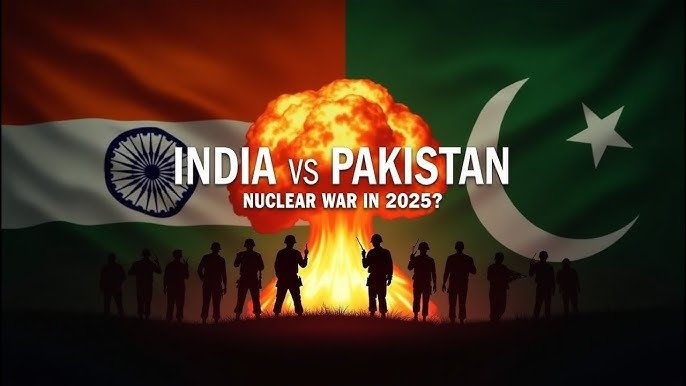

Nuclear Doctrine
Federal Minister for Planning and Development Ahsan Iqbal issued a stern warning to India on Saturday, cautioning against any deviation from its commitment to a “no first use” nuclear doctrine. Speaking at a press conference in Islamabad, Iqbal emphasized that Pakistan is fully capable and prepared to respond to any act of aggression, making it clear that the country would act decisively and in its own way if pushed.
“We do not want the promise of not using nuclear weapons to be broken,” Iqbal said, referring to India’s recent missile strikes on Pakistani territory on May 7, which he condemned as “cowardly.” The minister stated that Pakistan’s resolve was “strong and forged of iron” and assured that the country’s response would be “measured, but unwavering.”
His remarks came as border tensions between the two nations escalated, particularly after Pakistan accused India of targeting civilians, including children, during a series of aerial violations that took place over two nights. In retaliation, Pakistani forces intercepted and shot down more than 70 Indian drones that had breached the country’s airspace.
Iqbal warned India against continuing these provocative actions, stressing that the more damage India inflicted on Pakistan, the greater the consequences it would face. He argued that such tactics only served to destabilize the region and were not in the interest of either nation.
Despite the aggression, he highlighted Pakistan’s restraint in responding, indicating the country’s deliberate choice to avoid escalating the conflict. “Our intention is not to escalate, but we will not tolerate any attack on our integrity,” he said.
The minister also criticized India for violating international norms, calling the missile strikes on Pakistani targets a breach of peace. “The attack on the night of May 7 was not just cowardly, it was a violation of peace. Civilians, including children, were targeted,” he said, adding that Pakistan had made its “red lines” clear.
Iqbal further warned that continued hostility from India would harm its economic interests more than those of Pakistan. He pointed out that India’s economy was more vulnerable to the effects of the ongoing conflict and that its own citizens might push their leadership to reconsider its aggressive actions.
Reaffirming Pakistan’s determination, Iqbal stated that the entire nation stood united behind its armed forces in the defense of the country. “No one can defeat our resolve,” he said, underscoring the unbreakable spirit of the Pakistani people. He also warned that India’s actions, driven by what he called “fanaticism,” posed not only a risk to regional stability but also to India’s own internal peace, urging the Indian leadership to reconsider its course before further damage was done.
