

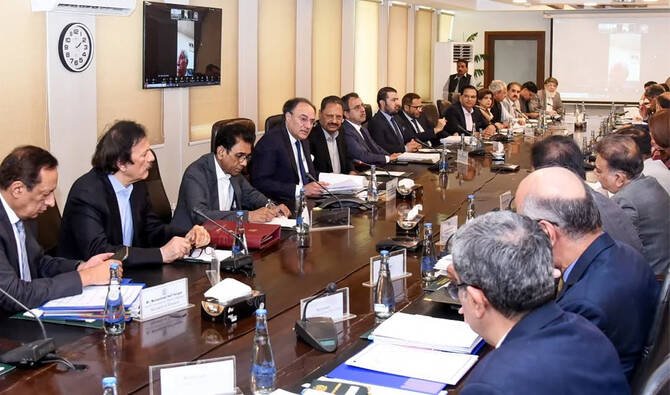

As tensions escalate in the Middle East following Israel’s recent strikes on Iran, Prime Minister Shehbaz Sharif has established a high-level crisis committee to safeguard Pakistan’s energy security and monitor developments in global oil markets.
According to a statement issued by the Ministry of Finance on Monday, the committee—chaired by Finance Minister Muhammad Aurangzeb—has been tasked with overseeing fluctuations in petroleum product prices and assessing supply chain vulnerabilities in light of the unfolding geopolitical situation.
“The formation of this committee reflects the government’s proactive approach to securing national energy interests and maintaining market stability amid growing international uncertainty,” the statement said.
The committee includes senior officials from key federal ministries, regulatory bodies, and energy sector experts. It will monitor global oil futures, assess the predictability of petroleum supply chains, and examine the short- to medium-term foreign exchange implications of oil price volatility.
Additionally, the committee will conduct a comprehensive analysis of the fiscal impact in the event of a prolonged conflict in the region.
Global Oil Markets React to Conflict
Oil prices remained volatile on Monday following a 7% spike on Friday, driven by concerns over potential supply disruptions. By early Monday, Brent crude futures had climbed 64 cents (0.86%) to $74.87 per barrel, while U.S. West Texas Intermediate (WTI) rose 76 cents (1.04%) to $73.74.
The volatility comes amid continued missile exchanges between Iran and Israel, including Iranian strikes on Tel Aviv and Haifa that caused significant damage and civilian casualties. World leaders attending the G7 summit have expressed growing alarm over the possibility of a broader regional war.
The risk of disruptions to the Strait of Hormuz—a key maritime route for nearly 20% of global oil trade—has further heightened global energy concerns.
Pakistan’s Energy Supply Position
During its inaugural meeting on Monday, the crisis committee reviewed domestic and international petroleum market conditions. Officials confirmed that Pakistan currently holds sufficient fuel reserves, and there is no immediate threat to supply.
“However, members stressed the importance of maintaining vigilance given the rapidly evolving regional dynamics,” the statement noted.
To ensure swift responses and effective coordination, a working group will monitor developments daily, while the full committee will convene weekly to provide updates and recommendations to the Prime Minister. The Petroleum Division will act as the committee’s secretariat, overseeing the implementation of its directives.
The government reaffirmed its commitment to protecting Pakistan’s energy security and economic stability during this critical period.
