


ISIS Terrorist
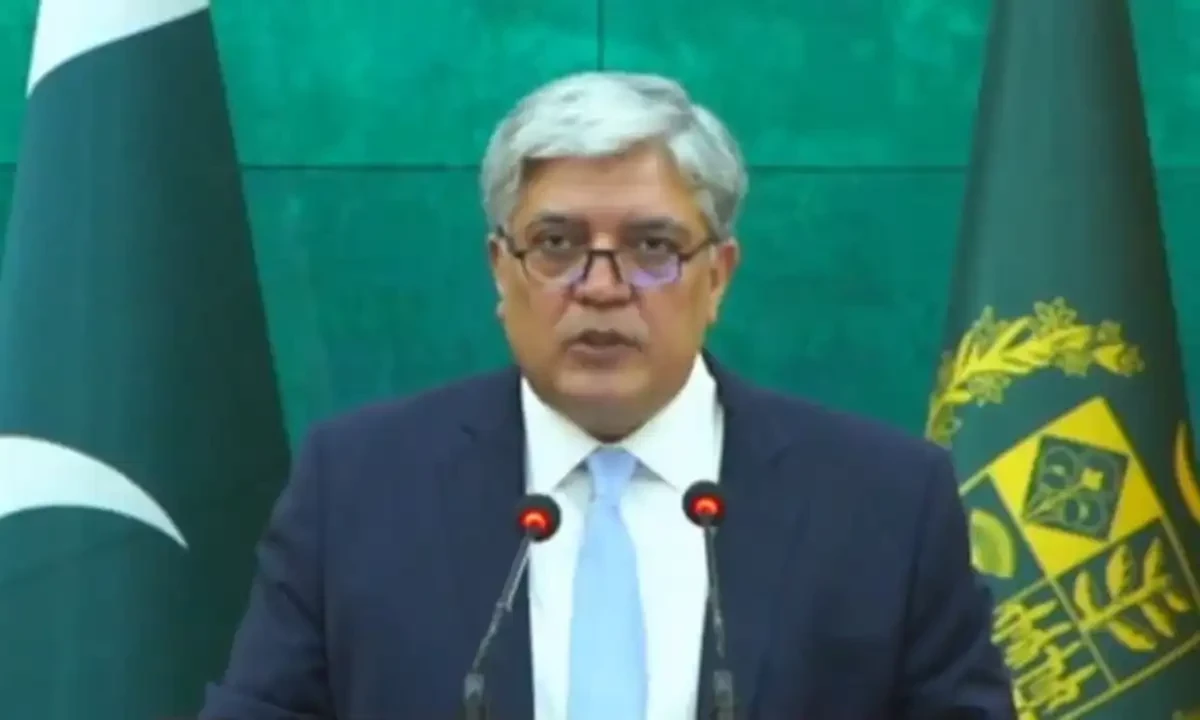
Pakistan has officially transferred a Daesh terrorist to the United States in compliance with United Nations resolutions, according to Foreign Office spokesperson Shafqat Ali Khan. The move underscores Pakistan’s commitment to counterterrorism efforts and its cooperation with international partners in ensuring global security.
During a high-level discussion, Deputy Prime Minister and Foreign Minister Ishaq Dar and the US National Security Adviser deliberated on the issue of American weapons left behind in Afghanistan. Dar stressed that removing these abandoned arms would contribute significantly to regional stability by preventing their misuse by terrorist groups.
Meanwhile, Ishaq Dar has departed for Saudi Arabia to attend the Organization of Islamic Cooperation (OIC) Council of Foreign Ministers meeting. The session will primarily address Israel’s ongoing aggression against Palestinians and the forced displacement of civilians in Gaza.
Foreign Office spokesperson Shafqat Ali Khan also disclosed that Dar held discussions with Azerbaijan’s foreign minister, further strengthening Pakistan’s diplomatic ties in the region.
Additionally, the latest round of Pakistan-Italy bilateral political consultations took place in Rome, where both countries focused on enhancing diplomatic relations and addressing regional affairs.
Reaffirming Pakistan’s commitment to combating terrorism, Khan highlighted the success of security operations against terrorist networks. He confirmed Pakistan’s cooperation with the United States in targeting terrorist operative Sharifullah, underscoring the strong counterterrorism collaboration between the two nations.
Khan also reiterated that Afghanistan continues to serve as a safe haven for terrorist groups, with abandoned US weapons being used against Pakistan. However, he assured that intelligence-sharing and security cooperation between Islamabad and Washington remain intact.
Regarding the recent Torkham border closure, the Foreign Office clarified that Pakistan did not unilaterally shut down the crossing. The issue emerged when Afghanistan’s interim government attempted to construct unauthorized structures within Pakistan’s territory.
While the dispute remains unresolved, Pakistan is committed to finding a peaceful solution through diplomatic negotiations. Khan urged Afghanistan’s interim government to renounce violence and work towards fostering peace in the region.
On the Kashmir issue, Pakistan strongly rejected a statement by the Indian external affairs minister, who claimed that the dispute would be resolved once Islamabad returned the so-called “stolen part” of Azad Jammu and Kashmir (AJK).
During his weekly media briefing, Khan reaffirmed that Jammu and Kashmir remains an internationally recognized disputed territory. He emphasized that the final status of Kashmir must be determined in accordance with applicable United Nations Security Council resolutions and the aspirations of the Kashmiri people.
The Foreign Office spokesperson also dismissed India’s claims over AJK and Gilgit-Baltistan, stating that New Delhi has no legal or moral basis to assert sovereignty over these regions. He stressed that India’s rhetoric cannot alter the reality of Kashmir’s disputed status.
Additionally, Khan addressed reports concerning the Wakhan Corridor, firmly denying any allegations of Pakistan seeking to annex the region. He clarified that the corridor is part of Afghanistan and called on the Afghan government to take decisive action against terrorist groups operating within its borders.
Speaking on Pakistan’s relations with Bangladesh, Khan highlighted that Bangladesh is an important regional partner, and Islamabad aspires to build strong, dynamic, and mutually beneficial ties with Dhaka.
Furthermore, Khan strongly condemned Israel’s blockade on humanitarian aid to Gaza, labeling it a blatant violation of international law and human rights. He reiterated Pakistan’s unwavering support for the Palestinian cause and called for an immediate end to Israeli aggression in the region.
