

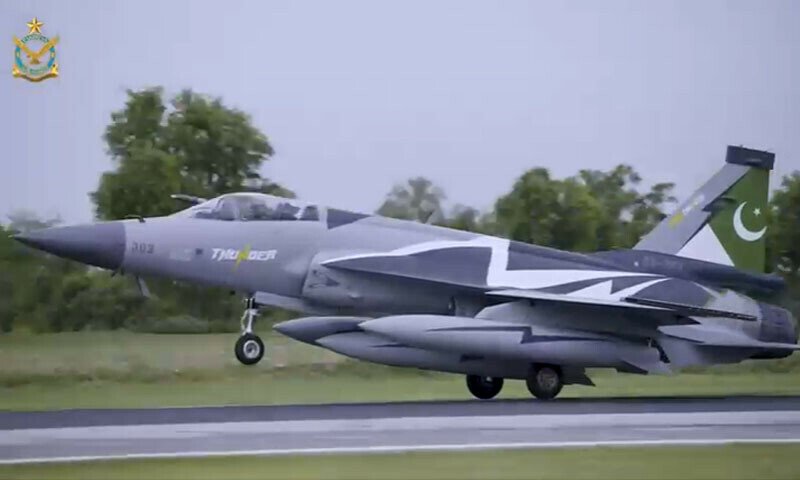

International Interest Rises in Pakistan-China Joint Fighter Program
Pakistan has confirmed active negotiations for the export of the JF-17 Thunder fighter aircraft. The discussions involve several interested countries from different regions. The confirmation reflects growing global demand for cost-effective modern combat aircraft.
Minister for Defence Production Raza Hayat Hiraj shared the update in an interview with the BBC. He said multiple international talks are currently underway. These negotiations focus on the sale and purchase of the JF-17 Thunder. The aircraft is jointly developed by Pakistan and China.
The minister stated that the fighter jet has drawn attention due to its modern technology and competitive pricing. Many countries are seeking affordable alternatives to expensive Western fighter platforms. The JF-17 Thunder fits this requirement effectively.
However, China’s approval remains essential for any export deal. Since the aircraft is co-produced, Beijing’s consent is mandatory. Pakistan cannot finalize agreements independently. This highlights the strategic partnership between Pakistan and China in defence manufacturing.
Advanced Features Make JF-17 Thunder Globally Competitive
The JF-17 Thunder Block III represents the most advanced version of the aircraft. It is classified as a 4.5-generation multirole fighter jet. The aircraft is capable of handling diverse combat missions.
It is equipped with an Active Electronically Scanned Array radar. The AESA radar enhances detection range and tracking accuracy. It improves survivability in modern aerial warfare. The fighter also carries long-range beyond-visual-range missiles. These weapons allow engagement of enemy aircraft from significant distances.
Such features place the JF-17 Block III in the same category as many high-end global fighters. Aircraft with similar technology often dominate modern air forces. They are designed for air superiority, ground attack, and maritime strike roles.
According to the defence production minister, comparable fighter jets usually cost between $250 million and $350 million. These high prices restrict access for smaller or developing nations. Maintenance and lifecycle costs further add to the financial burden.
Affordable Pricing Strengthens Export Potential
In contrast, the JF-17 Thunder offers a cost-effective solution. The aircraft is priced between $40 million and $50 million per unit. This makes it significantly cheaper than most competitors. Even with optional advanced features, the cost remains competitive.
This affordability gives Pakistan an advantage in the global defence market. Many countries aim to modernize air forces without overstretching budgets. The JF-17 Thunder addresses this need effectively.
The aircraft can enhance defence capabilities of purchasing nations. It provides modern radar systems, advanced weapon integration, and multirole flexibility. These features strengthen airspace security and deterrence capabilities.
Pakistan’s growing role as a defence exporter is gaining recognition. Successful JF-17 exports could boost foreign exchange earnings. They could also strengthen strategic ties with partner countries.
As negotiations continue, analysts expect export talks to expand further. The JF-17 Thunder is emerging as a strong contender in the global fighter jet market.
