

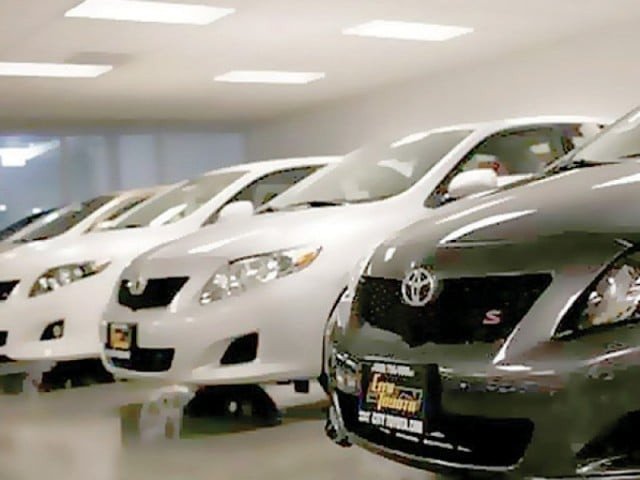

Pakistan’s automobile sector saw a strong recovery in August 2025, reversing July’s slump with impressive growth across multiple categories. Car sales jumped to 14,050 units, reflecting a 27% month-on-month rise and a 62% increase compared to the same period last year.
For the first two months of FY26, cumulative sales reached 25,093 units, showing a 45% rise from 17,288 units recorded during the same period in FY25.
Reasons Behind the Recovery
The rebound came after July sales hit a seven-month low due to pre-buying in June ahead of vehicle tax hikes. Analysts highlighted several factors that supported August’s recovery. These included a favorable low base effect, reduced interest rates, easing inflationary pressure, and the launch of new hybrid models such as the Haval PHEV and Honda HR-V Hybrid.
Despite flood-related challenges, demand recovered significantly. Market experts noted that the smaller car segment drove most of the growth, showing how affordability continues to influence buyer preference.
Small Cars Lead the Market
Sales of cars below 1000cc surged 79% month-on-month, reaching 4,569 units, with the Suzuki Alto leading the category. Vehicles in the 1000cc range doubled to 519 units, while sales of cars above 1300cc rose 15% month-on-month to 4,928 units.
Industry reports confirmed that nearly 80% of the growth came from cars with horsepower up to 1000cc, underlining the dominance of smaller, fuel-efficient models.
Company-Wise Performance
Pak Suzuki Motor Company recorded the strongest rebound with sales up 96% month-on-month and 107% year-on-year, totaling 7,154 units. Suzuki Swift volumes surged 182%, Cultus rose 108%, and Alto climbed 80%. However, Wagon R saw a 12% decline.
Indus Motor Company, assembling Toyota vehicles in Pakistan, reported a modest 2% monthly growth to 3,400 units, though sales were still 60% higher year-on-year. Corolla and Yaris sales increased slightly, while Fortuner and Hilux sales fell by 8%.
Honda Atlas Cars reported a 28% drop to 1,073 units, reflecting a sharp 39% decline in Civic and City sales. However, its HR-V and BR-V models benefited from hybrid introductions.
Hyundai Nishat sold 1,212 units, marking an 83% rise year-on-year, although monthly volumes slipped slightly. Sazgar Engineering delivered 1,049 units, down 3% month-on-month but up 110% year-on-year, supported by demand for Haval SUVs and BAIC models.
Broader Auto Market Trends
Motorcycle sales rose 19% month-on-month and 42% year-on-year to 148,063 units. Atlas Honda led the segment, selling 126,529 units, up 21% from July. Three-wheeler volumes also grew 33% month-on-month, with strong contributions from Sazgar Engineering.
However, tractor sales declined 17% month-on-month to 996 units, as rural stress and flood disruptions impacted demand. Millat Tractors posted a 22% fall, while AGTL slipped 2%.
Truck and bus sales, on the other hand, surged 23% month-on-month and 47% year-on-year to 770 units, reflecting stronger logistics and transport activity.
Production and Sustainability Concerns
Production levels also increased significantly. Car output doubled in the July–August FY26 period, rising to 22,446 units from 11,171 last year. Suzuki Alto led production with an impressive 220% jump, reaching 11,046 units.
However, analysts remain cautious about the sustainability of this recovery. High vehicle prices, costly auto financing, and currency fluctuations may continue to weigh on long-term demand.
Pakistan’s auto sector rebound in August 2025 highlights consumer interest in small cars and hybrids, aided by easing inflation and favorable financing conditions. While production and sales are on an upward trend, challenges such as high costs and economic uncertainty could still impact future growth.
