

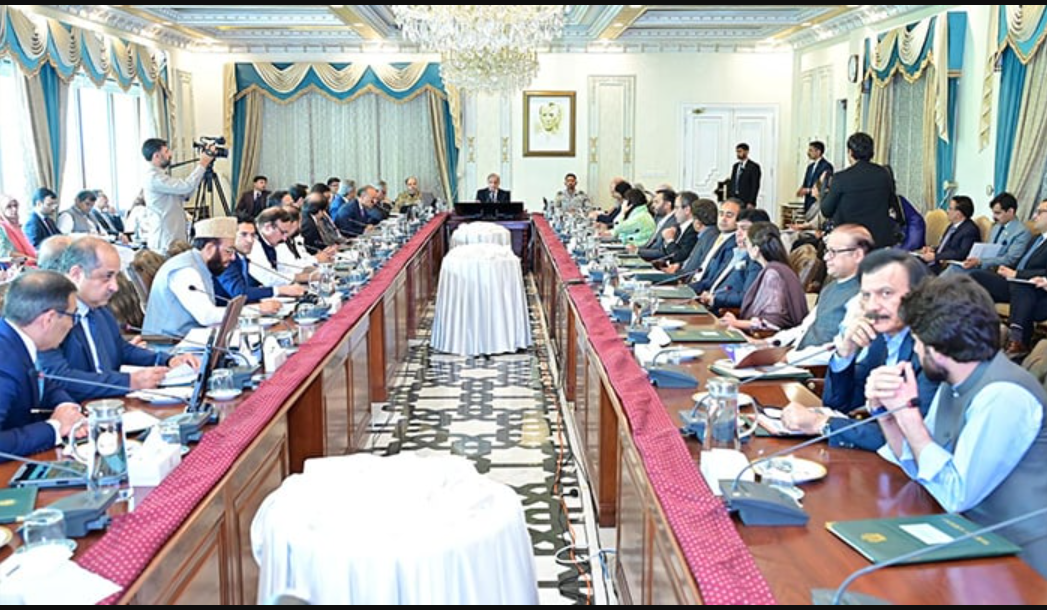

The federal cabinet has approved Pakistan’s first National Artificial Intelligence (AI) Policy 2025, setting ambitious goals to build a full-scale AI ecosystem across the country. The policy, endorsed during a high-level meeting chaired by Prime Minister Shehbaz Sharif, aims to revolutionize multiple sectors including education, public services, governance, and agriculture through AI-driven transformation.
As part of the strategic vision, the policy targets the training of one million AI professionals by the year 2030. In addition, it seeks to launch 1,000 indigenous AI-based products within five years, marking a substantial push towards digital innovation and local technological development.
Key components of the policy include:
- Launching 50,000 AI-integrated civic projects
- Facilitating 1,000 research initiatives
- Offering 3,000 scholarships annually for students pursuing AI education
- Providing targeted support for women and differently-abled individuals in the tech sector
- Establishing alignment between local AI standards and global regulations
To ensure proper execution and oversight, an AI Council will be formed, supported by a comprehensive Master Plan and an Action Matrix. These tools will help monitor progress and ensure that all initiatives stay on course. Additionally, the government plans to establish dedicated AI Innovation and Venture Funds to promote startup culture and encourage private sector participation.
Prime Minister Shehbaz Sharif emphasized the critical importance of youth empowerment, highlighting the need to equip the younger generation with modern skills to secure a competitive edge in the global economy. He praised the Ministry of Information Technology and related departments for their work in preparing the policy, stating that the initiative will not only modernize Pakistan’s economy but also improve efficiency in governance and public services.
Hajj Policy 2026: Digitization and Accountability Reforms
Alongside the AI policy, the cabinet also approved the Hajj Policy 2026, introducing full digitization of the pilgrimage process from the year 2026 onwards. The revamped policy divides the quota such that 70% of pilgrims will participate under the government scheme, while 30% will use private tour operators, who will now be subject to increased scrutiny and regulatory oversight.
Key features of the updated Hajj policy include:
- Real-time tracking of pilgrims
- Use of digital wristbands and mobile apps
- Provision of SIM cards to all pilgrims
- Introduction of a new compensation mechanism for service lapses
- Strict financial eligibility criteria for private tour operators
- Digitized training and emergency response mechanisms
- Alignment of the policy with Saudi Arabia’s Hajj operation timeline
Private Hajj companies that underperformed in the previous year are now required to offer services to the same pilgrims in 2026 at the prior year’s rates. The government has also implemented a first-come, first-served policy for Hajj selection, along with a requirement that all pilgrims be vaccinated in accordance with Saudi regulations.
Furthermore, the “Road to Makkah” facility will continue to be available at the Islamabad and Karachi airports, simplifying immigration procedures for departing pilgrims. Emergency response teams and a comprehensive financial oversight framework will be deployed to ensure transparency and timely redress of grievances.
Children under the age of 12 will not be eligible to perform Hajj, and the longstanding Hajj Nazim Scheme will remain in effect. The Ministry of Religious Affairs is set to begin implementing the policy starting August 4.
In light of recent issues related to payment delays by private operators, new measures will require these firms to prove financial viability and to comply with timely payment obligations. Monitoring will be conducted by independent third-party agencies to uphold fairness and accountability across both public and private Hajj arrangements.
These two major policy approvals reflect a broader commitment by the government to foster innovation, ensure transparency, and deliver modern solutions across various sectors.
