


International Law
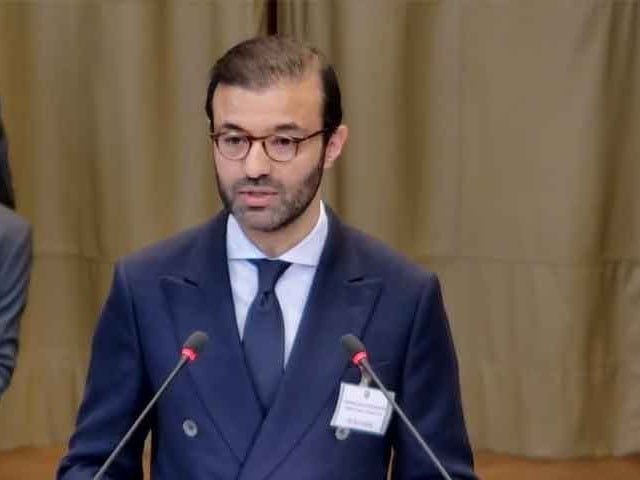
ISLAMABAD: In a resolute stance presented at the International Court of Justice (ICJ) on Friday, Pakistan strongly urged the tribunal to intervene and prevent Israel from continuing its violations of international law in the Occupied Palestinian Territory, including East Jerusalem.
Caretaker Minister for Law and Justice, Ahmed Irfan Aslam, emphasized the illegality of Israel’s occupation and insisted that allowing Israel to benefit from such actions would undermine the ICJ’s crucial role in upholding justice. He asserted that the ICJ would fail in its judicial functions if it did not intervene to prevent Israel from profiting from its ongoing violations.
The presentation, part of advisory proceedings initiated in December 2022 following a request from the United Nations General Assembly, highlighted the urgent need to address the legal consequences of Israel’s prolonged occupation and its adverse impact on the Palestinian population.
Minister Aslam argued that Israel’s policies, including illegal settlements and systematic racial discrimination amounting to apartheid, constitute violations of international humanitarian law and human rights that should not go unchecked.
The minister criticized Israel’s settler policy for creating irreversible changes on the ground and perpetuating the unlawful occupation. He called on the ICJ to recognize the severe implications of these policies on Palestinian rights and the broader violations of international norms.
Against the backdrop of increasing violence against Palestinians by Israeli forces, Pakistan reiterated its support for the Palestinian cause, urging an immediate ceasefire, sustained humanitarian aid to Gaza, and a viable solution that establishes a sovereign Palestinian state within the pre-1967 borders, with Al Quds Al Sharif as its capital.
The ICJ hearings have witnessed various delegations denouncing Israel’s conduct, with accusations ranging from colonialism to ethnic cleansing and genocide.
Israel has dismissed the ICJ’s advisory proceedings as illegitimate, advocating for a political resolution to the conflict, further highlighting the international divide over achieving peace in the Middle East.
