

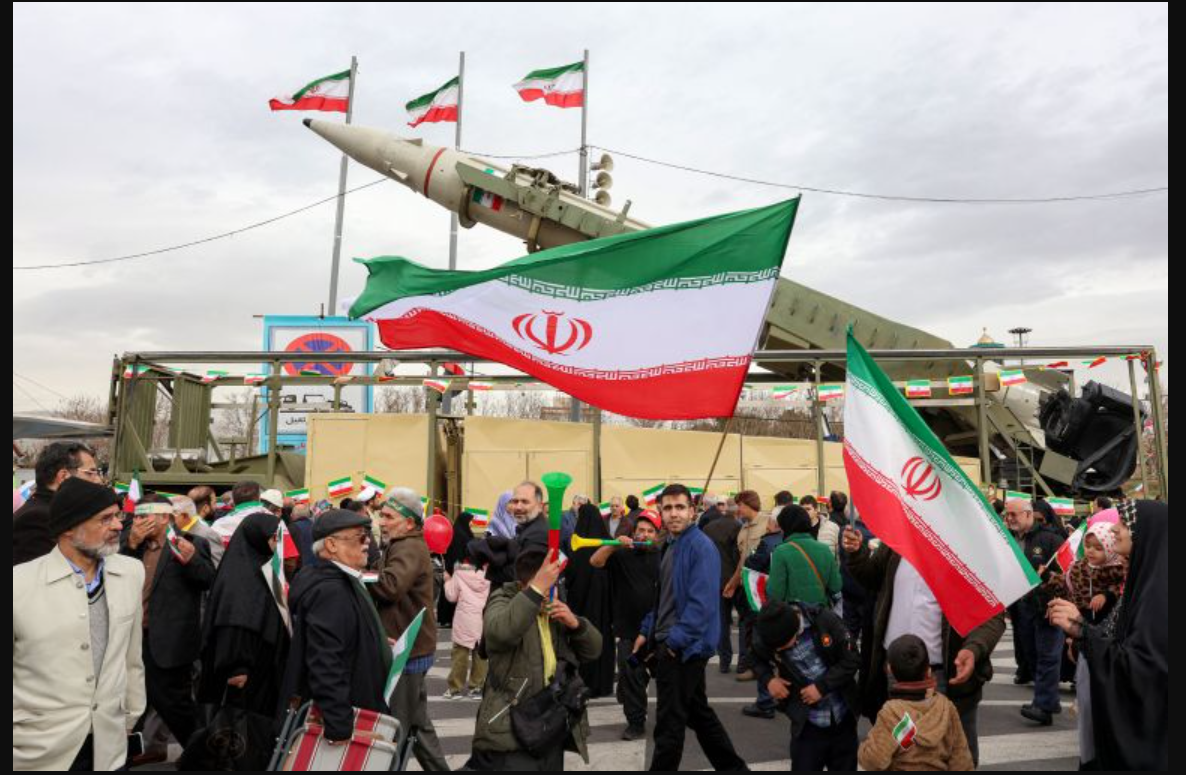

Iran has launched a major retaliatory military campaign against Israel, naming it Operation “Fatah Khyber.” The move follows recent strikes carried out by the United States and Israel on Iranian targets. As a result, tensions across the Middle East have sharply intensified.
Iran’s Islamic Revolutionary Guard Corps (IRGC) confirmed that ballistic missiles and drones were launched toward Israeli territory. In an official statement, the IRGC described the operation as a response to what it called aggression against the Islamic Republic. Moreover, it declared that the first wave of extensive missile and drone attacks had begun.
Missile Barrage and Israeli Response
Israeli authorities confirmed that ballistic missiles were fired from Iran. According to the military, around 30 missiles were launched during the initial phase. Consequently, air defence systems were activated immediately to intercept incoming threats.
Sirens sounded across northern Israel, including in Haifa, urging residents to seek immediate shelter. The Israeli Air Force engaged defensive systems to prevent further damage. Additionally, the army instructed civilians to strictly follow safety guidelines issued by the Home Front Command.
Officials emphasized that no defence system offers complete protection. Therefore, residents were advised to remain close to shelters and avoid unnecessary movement. While interception efforts continued, authorities did not immediately confirm the extent of damage.
Israel Closes Airspace
Following the missile strikes, Israel closed its airspace to civilian flights as a precautionary measure. Authorities stated that the decision aimed to safeguard passengers and aircraft amid the escalating security situation. However, officials have not disclosed detailed information regarding casualties or infrastructure damage.
The military stressed that defensive operations remain ongoing. Furthermore, it reiterated that air defence units were deployed as soon as missile launches were detected.
Regional Safety Measures Intensify
The impact of Operation Fatah Khyber has extended beyond Israel. Iraq temporarily shut down its airspace due to rising regional tensions. Meanwhile, in Qatar, staff at the United States Embassy were moved to secure shelters as a precaution.
Shortly after the strikes, Pakistan issued a travel advisory for its citizens in Iran. Authorities urged nationals to avoid unnecessary travel and remain cautious as the situation evolves.
A Region on Edge
This latest exchange marks a significant escalation between Iran and Israel. Military analysts warn that further retaliation could deepen instability across the region. Although diplomatic efforts may emerge, both sides currently appear focused on security operations.
For now, defensive systems remain active, and governments across the Middle East are monitoring developments closely. The coming days will likely determine whether the confrontation stabilizes or expands into a broader regional conflict.
