

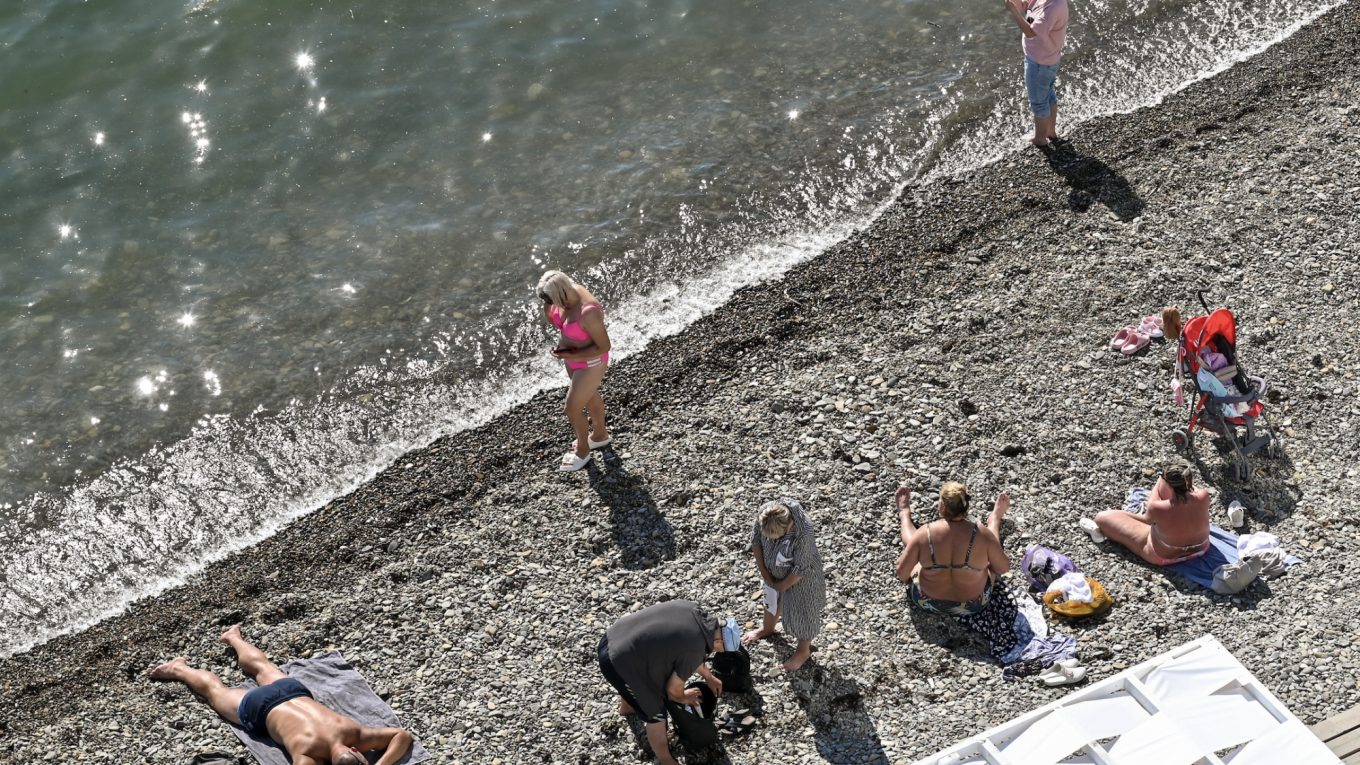

Each summer, vacationers flock to Russia’s Black Sea coast, drawn by its sunny weather and warm waters—an escape from the cooler climate found in much of the country. But this year, many are returning despite one of the worst environmental disasters in Russia’s recent history.
In late December 2024, two aging oil tankers—Volgoneft 212 and Volgoneft 239—sank during a storm in the Kerch Strait, between the annexed Crimean peninsula and Russia’s Krasnodar region. The incident released approximately 2,400 tons of mazut, a heavy and highly toxic fuel oil, polluting around 50 kilometers of coastline and endangering marine life and coastal ecosystems.
Since the spill, authorities, volunteers, and local residents have been working tirelessly to remove the thick, sticky substance, which is notoriously difficult to clean up. Despite these efforts, concerns remain about the safety of Black Sea resorts.
Russia’s public health agency, Rospotrebnadzor, has warned that beaches near Anapa “remain at risk.” An official ban on swimming is still in effect. Nevertheless, tourists continue to sunbathe and swim—sometimes wading into waters where black globs of mazut can still be seen floating.
For many Russians, the Black Sea remains one of the most affordable and accessible summer destinations. For local communities, the tourist season is not just a tradition, but a lifeline.
“It’s just despair,” wrote Anapa resident Katerina Zakharova on VKontakte. “Many of us depend on tourism. What are we supposed to do this year? How do we feed our families?”
Still, Zakharova and others express confidence that the worst has passed. “Thanks to volunteers, the sand is clean, and the sea is full of fish and dolphins,” she said. “Some people are clearly eyeing billions in emergency funds, while others are simply trying to survive.”
Tourism has taken a significant hit. A local travel agency reported that demand for summer trips to Anapa dropped 60–65% in early March 2025 compared to the previous year, with around 20% of early-bird bookings cancelled. In response, the city has suspended its tourist tax for the entire year to support local businesses.
Some officials have proposed shifting summer camps to facilities with swimming pools until beaches are confirmed safe. Meanwhile, a number of residents insist that the shoreline is now clean and claim the swimming ban is overly cautious.
“The sea looks fine. The authorities banned swimming just in case—like they did during COVID,” wrote Dmitry Ivanov on VKontakte.
Others downplay the alarm. “They’re cleaning it up. What about the seaweed that washes ashore and stinks every summer?” said Maria Magomedova. “No one complains about that.”
Speculation has also emerged that the pollution reports have been exaggerated to drive tourists away from Anapa and toward other destinations.
Whether due to determination, disbelief, or economic desperation, many vacationers are choosing to return to the beaches—pollution and all—underscoring just how vital the summer season is to the region.
