

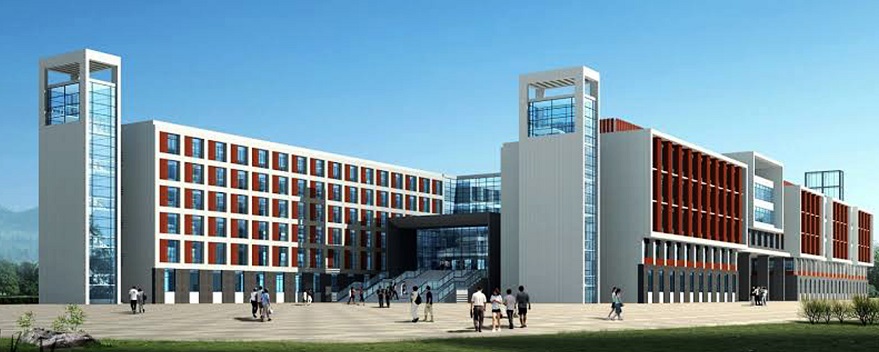

NUIST of China
ISLAMABAD: A famous university of China, Nanjing University of Information Sciences and Technology has offered fully funded scholarships for Pakistani students in the field of Climate Change and Environmental Governance.
Professor Dr Tong Jiang of NUIST and Executive Director for the Research Institute of Climatic and Environmental Governance confirmed the development.
He said that his department is offering scholarships in the field of Climate Change and Environmental Governance for Pakistani students.
Dr Tong said that the NUIST is collaborating with NUST and both the universities have signed an MoU to foster collaboration in scientific research and exchanges of students and faculty.

He further stated that the NUIST is also signing MoUs with other prominent universities of Pakistan such as Quaid-e-Azam University, COMSATS University Islamabad, and the Pakistan Meteorological Department.
Young scientists from Pakistani universities will be able to get admission in the NUIST. He also said that the NIUST would offer Environmental Change Postdoctoral positions to scholars when they complete their study.
He said, “Our new project in Pakistan is focused on water shortage and tipping points about climate change. Pakistan suffered great losses due to heavy floods last year and now facing high temperatures and drought.”
In Pakistan, the water shortage and its wastage are increasing. It is probably because of the increasing population and deficiencies in the water management mechanism.
He said that Pakistan’s economic system is also based on Agriculture and for this water is an essential component. So, therefore, our research would focus to overcome this climate change impact and reducing the water shortage.
Talking about air pollution and smog problems, he said that the major causes of poor air quality are industrial emissions, vehicular emissions, domestic emissions, construction-related dust emissions, smoke from brick kilns, and soot from burning agricultural waste.
For solutions, he said industries should be shifted from cities to industrial areas, converting the system to renewable energy, increasing the use of affordable public transport system, planting trees, and better management of livestock and waste from cities.
