


Ground Operation
US National Security Adviser Jack Sullivan has unequivocally conveyed President Joe Biden’s opposition to a ground operation in the Palestinian city of Rafah, amid escalating tensions in the region.
This statement comes amidst growing concerns over potential military action by Israeli forces, raising the stakes in an already volatile situation.
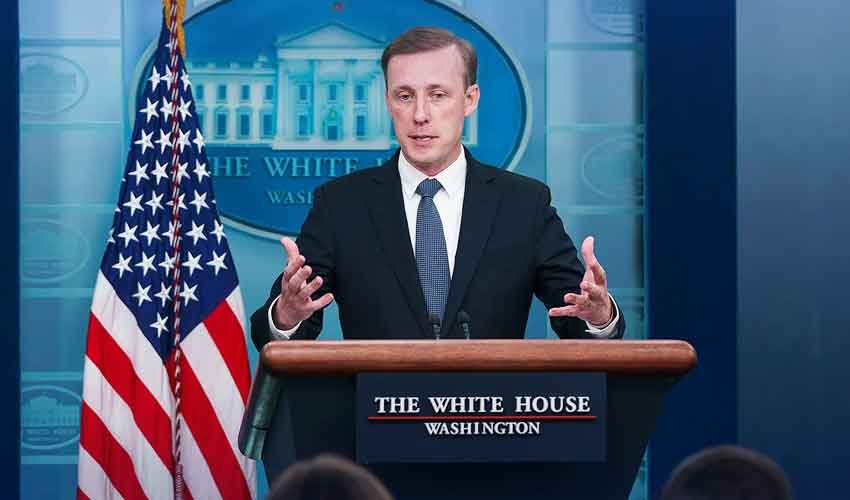
Sullivan, during a recent press briefing, underscored that an attack on Rafah would not contribute to stability in the region.
The White House, cognizant of the humanitarian implications and potential civilian casualties, particularly with over 1.3 million Palestinian refugees in Rafah, expressed deep concerns about the consequences of military action.
“Our position is that a military operation in Rafah that does not protect civilians, that cuts off the main arteries of humanitarian assistance, and that places enormous pressure on the Israel-Egypt border is not something that he can support,” Sullivan emphasized during the weekly briefing.
He further noted ongoing discussions with Israeli authorities, indicating that the Biden administration is actively “working through” the situation.
The Biden administration’s stance diverges from the reported intentions of Israeli Prime Minister Benjamin Netanyahu, who apparently plans to proceed with an attack on Rafah despite objections from the United States.
In the face of this tense situation in Rafah, where the specter of military action looms large, diplomatic efforts are persistently engaged in navigating the delicate balance of regional tensions.
The Biden administration’s firm position underscores the importance of comprehensive planning and diplomatic solutions in addressing the intricate and multifaceted challenges facing the Middle East.
As the situation evolves, the eyes of the international community remain focused on the region, urging a diplomatic resolution to prevent further escalation and promote stability in the broader Middle East.
