

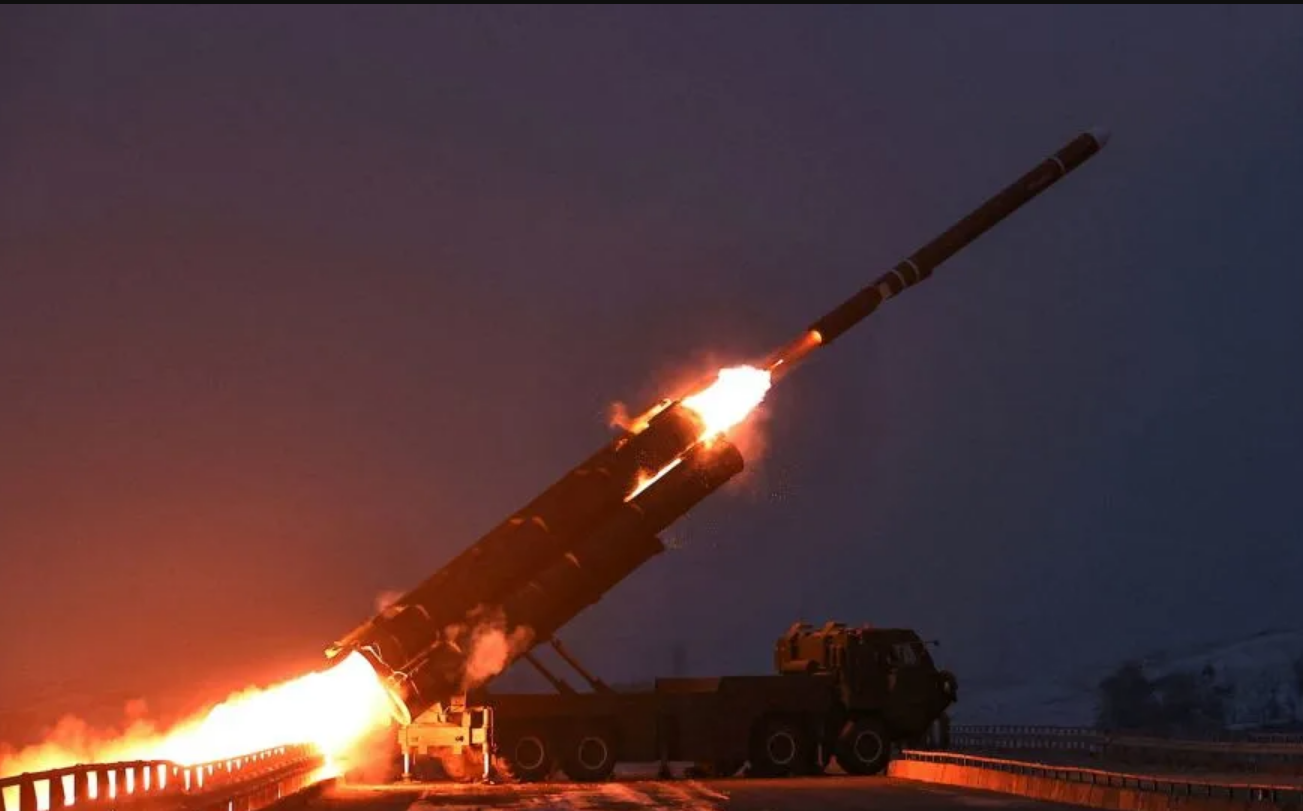

North Korea fired multiple ballistic missiles on Sunday, sharply raising tensions across East Asia. The launches coincided with South Korean President Lee Jae Myung’s official visit to Beijing. Moreover, they occurred only hours after a major United States military operation elsewhere. As a result, regional unease intensified quickly.
Details of the Missile Activity
Regional security assessments confirmed that at least two ballistic missiles were launched. The missiles traveled approximately 900 to 950 kilometers before landing in the East Sea. This activity marked Pyongyang’s first missile test in nearly two months. The previous launch had taken place in early November. Consequently, the sudden timing drew immediate attention from regional observers.
Strategic Timing Raises Questions
Analysts widely believe the timing was carefully calculated. The launches happened as President Lee began high-level engagements in China. Therefore, the move appeared designed to project strength and autonomy. Officials noted that the tests reinforced Pyongyang’s claim of credible nuclear deterrence. This message came amid shifting diplomatic dynamics in the region.
Signals Aimed at Beijing and Washington
Observers argue the missile tests targeted multiple audiences. First, they signaled discomfort over deepening diplomatic engagement between Seoul and Beijing. President Lee’s visit includes discussions on stability and renewed dialogue. Second, the launches conveyed a message to Washington. North Korea sought to assert that it must be treated as a nuclear-armed power, not a marginal actor.
Swift Regional Responses
South Korea’s presidential office convened an emergency security meeting shortly after the launches. Officials urged Pyongyang to halt provocative actions immediately. They emphasized that such missile tests violate United Nations Security Council resolutions. Meanwhile, Japan issued a strong condemnation. Tokyo warned that the launches pose serious risks to regional and global peace.
United States and Allied Coordination
United States military officials stated that the launches posed no immediate threat to American territory or forces. However, they stressed close coordination with regional allies. Monitoring efforts remain active as diplomatic channels continue operating. This approach reflects caution amid rising uncertainty.
Kim Jong Un’s Expanding Military Drive
North Korean leader Kim Jong Un has intensified military preparations in recent months. He has inspected weapons factories and strategic facilities repeatedly. Additionally, he ordered a significant expansion in tactical guided weapons production. These steps suggest an effort to strengthen leverage ahead of key political developments later this year.
Diplomatic Fallout Across the Region
President Lee’s Beijing visit aims to encourage China to support dialogue on the Korean Peninsula. However, the missile launches complicate that objective. Experts believe Pyongyang seeks stronger bargaining power before any future negotiations. Consequently, diplomatic momentum faces renewed strain.
An Increasingly Volatile Landscape
The missile tests underline growing uncertainty in East Asia. Shifting alliances and global military actions continue shaping regional behavior. As a result, diplomacy and deterrence now advance in parallel, keeping tensions elevated.
