

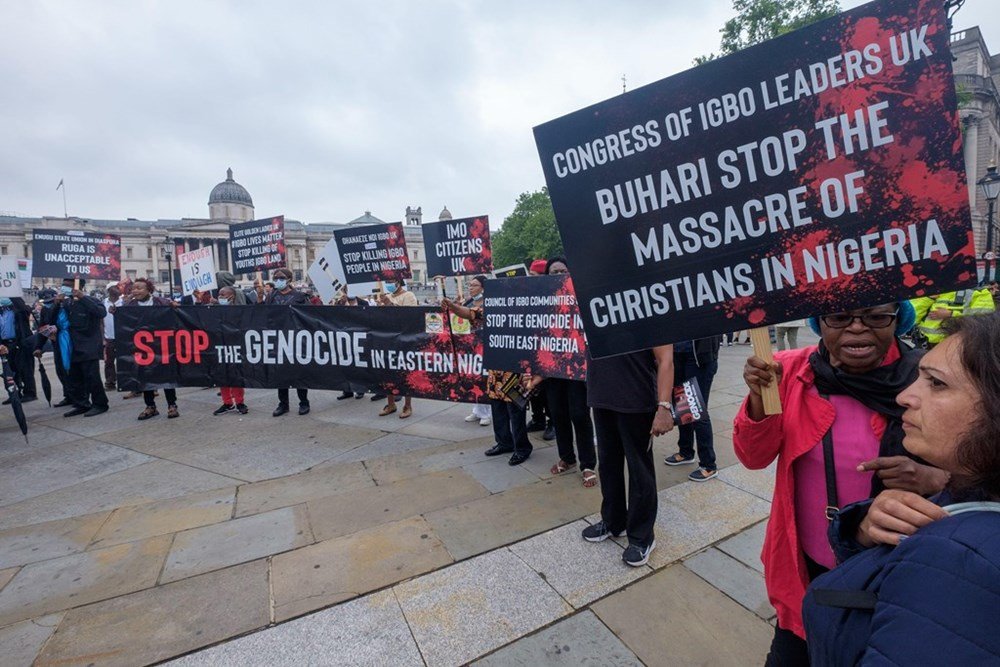

Nigeria has officially rejected U.S. President Donald Trump’s claims of a “genocide” against Christians, calling the allegations unfounded and politically motivated. The statements came after Trump suggested that the U.S. could consider military intervention in Nigeria, including deploying troops or launching air strikes, to stop what he described as “mass killings of Christians.”
Speaking aboard Air Force One on Sunday, Trump emphasized, “They’re killing Christians and killing them in very large numbers. We’re not going to allow that to happen,” adding that a range of military options was under consideration.
Officials in Abuja swiftly dismissed the remarks, insisting that the violence in Nigeria is not religiously motivated but rather part of broader security challenges involving terrorism and banditry.
Kimiebi Imomotimi Ebienfa, spokesperson for Nigeria’s Ministry of Foreign Affairs, told Al Jazeera that the narrative of Christians being exclusively targeted is incorrect. “There is no Christian genocide in Nigeria… The killings were not restricted to Christians alone. Muslims are being killed. Traditional worshippers are being killed… The majority is not the Christian population,” he stated.
While Nigeria expressed willingness to cooperate with international partners, officials emphasized that any foreign intervention must respect the country’s sovereignty.
Daniel Bwala, adviser to President Bola Tinubu, stressed that Nigeria would welcome assistance as long as territorial integrity is recognized. “We don’t take it literally… by the time these two leaders meet, there would be better outcomes in our joint resolve to fight terrorism,” he added.
Trump’s comments followed the U.S. reinstating Nigeria on its “Countries of Particular Concern” list for alleged violations of religious freedom, alongside nations such as China, North Korea, Russia, Myanmar, and Pakistan.
Nigeria, with over 200 million people, has a roughly equal split between a predominantly Muslim north and largely Christian south. The country has faced insurgencies from Boko Haram and the Islamic State’s West Africa Province (ISWAP) for more than 15 years, resulting in tens of thousands of deaths and mass displacement.
President Tinubu, a Muslim married to a Christian pastor, has rejected allegations of religious persecution, highlighting inclusivity in governance, including appointing a Christian as Nigeria’s new defence chief, as evidence of his administration’s commitment to equality.
